

Mazda has created an interesting dilemma for shoppers considering its compact crossover lineup. With the all-new 2026 CX-5 now arriving at dealerships and the proven CX-50 still available at virtually the same starting price, buyers face a choice that requires careful consideration of powertrains, interior design, and driving preferences.
The Powertrain Question
The 2026 CX-5 represents a significant shift in Mazda’s strategy. The company eliminated its turbocharged engine option, a decision driven by real market data: only 13 percent of CX-5 buyers selected the Turbo package. This leaves shoppers with a single naturally aspirated 2.5-liter four-cylinder engine for now, though Mazda has promised a hybrid variant to fill the performance gap left behind. The brand plans to develop its own hybrid system, distinct from what other models use.
The CX-50 offers considerably more flexibility. It starts with that same base 2.5-liter engine, but shoppers can upgrade to a turbocharged version that delivers 320 lb-ft of torque, a best-in-class figure that comes with minimal fuel economy penalty. The CX-50 Hybrid option delivers an impressive 38 mpg combined using Toyota’s proven hybrid system paired with an electric all-wheel-drive setup, similar to the technology found in the popular RAV4 Hybrid. However, this hybrid version sacrifices some rear seat space due to battery packaging and uses an electronic continuously variable transmission instead of a traditional automatic.
Interior Space and Comfort
The redesigned CX-5 grows substantially compared to its predecessor, stretching 4.5 inches longer with a 4.6-inch extension to the wheelbase. This translates to meaningful improvements in cabin and cargo capacity. Compared to the CX-50, the CX-5 proves notably more spacious in the back, offering 5.2 inches of rear knee clearance versus just 3 inches in the standard CX-50 and only 2.1 inches in the hybrid version. Cargo capacity follows suit, with the CX-5 providing 33.7 cubic feet against the CX-50’s 31.4 cubic feet.
The new CX-5 also features improved rear door opening angles of 90 degrees, making it considerably easier to install child car seats and load passengers. The CX-5 stands 2.8 inches taller than the CX-50, a difference that becomes immediately apparent when viewing the vehicles side by side and contributes to the roomier sensation inside.
The Interface Controversy
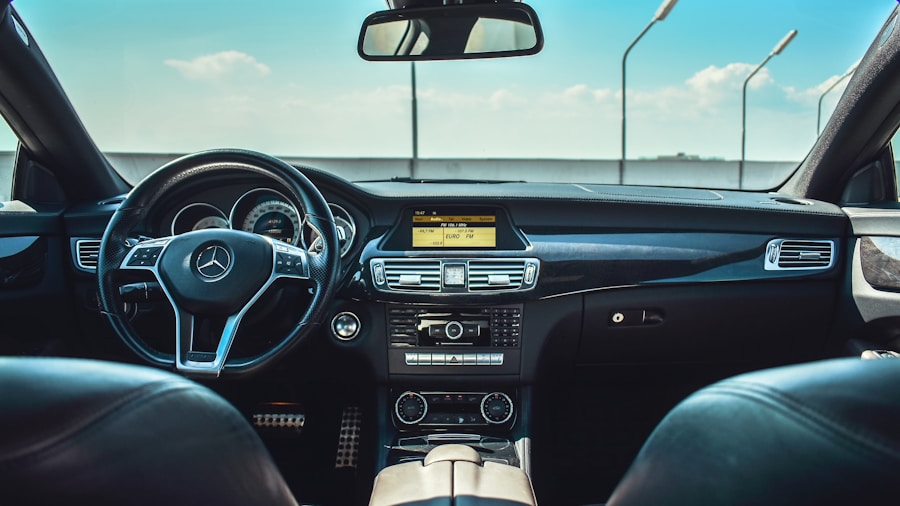
Perhaps the most debated change involves the CX-5’s new touchscreen interface. Mazda responded to complaints about its controller knob by swinging to the opposite extreme: a massive 12.9-inch screen in base models and an even larger 15.6-inch display in the Premium Plus trim. While the screen size itself remains competitive, Mazda’s decision to relocate all climate controls into the touch interface creates friction. Features like heated seats and steering wheel controls now require multiple taps to access, and only the steering wheel offers a dedicated volume knob, forcing passengers to navigate menus for audio adjustments.
The CX-50 maintains Mazda’s familiar interior design philosophy with a restrained 10.25-inch screen controlled primarily through its intuitive controller wheel. Physical buttons, knurled metal knobs for temperature adjustment, and a separate volume knob remain in place. The CX-50 retains a partially analog instrument cluster, while the CX-5 transitions to a fully digital 10.25-inch gauge cluster that proves well-executed despite the change.
Exterior Design and Capability
The vehicles reflect different design philosophies. The CX-50 embraces a rugged appearance with bold body cladding, flared fenders, and optional all-terrain tires through the Meridian Edition. The CX-5, freed from the need to appear rugged, focuses on sleek street-oriented styling that echoes Mazda’s newer design language seen on other recent models.
Dimensionally, the CX-5 is 1.2 inches shorter than the CX-50 but stands 2.8 inches taller, contributing to its more upright profile. Width measurements differ by just 1 inch, making them surprisingly similar overall despite the design differences.
Value and Dealer Negotiation
Both vehicles start at essentially the same price point, though costs diverge across trim levels. For instance, the CX-50’s 2.5 S Premium trim with ventilated seats carries a $34,900 price tag, while the equivalent CX-5 configuration costs $36,900. Shoppers should use Mazda’s online configurator to identify which specific trims represent better value for their priorities.
One practical advantage favors the CX-50: it has been available for several years, which typically translates to easier dealer negotiations and potential discounts. The brand-new CX-5, fresh to market, may carry less flexibility on pricing.
Making Your Decision
Choose the CX-5 if spacious rear seat and cargo capacity matter most, you’re satisfied with the base engine, and the touchscreen interface doesn’t concern you. Select the CX-50 if physical controls are essential, you need the best fuel economy through the hybrid option, or you want genuine turbocharged performance. Mazda’s commitment to engaging driving dynamics runs through both vehicles, so your choice ultimately hinges on these specific factors and which trim-level features align with your priorities and budget.









Write Your Review
No reviews yet. Be the first to share your experience!