

Long before the Ford F-150 revolutionized the truck market by switching to an all-aluminum body in 2015, the automaker was already experimenting with lightweight aluminum construction on a different vehicle. In 1994, Ford built and tested 20 specially modified Mercury Sable sedans with full aluminum bodies to prove the material could handle real-world demands on full-size vehicles. This lesser-known chapter in Ford history reveals how the company’s engineers gathered crucial data that would later inform the development of today’s aluminum-bodied trucks.
The 1994 Aluminum Intensive Vehicles Program
Ford’s aluminum test program, known as the Aluminum Intensive Vehicles (AIVs) initiative, involved 20 Mercury Sable sedans that were modified to feature aluminum bodies instead of traditional steel. Each vehicle was equipped with specialized monitoring equipment to track performance metrics throughout rigorous real-world testing. The company entered these vehicles in the “One Lap of America” endurance rally, a grueling six-day competition held in mid-June 1994 that covered approximately 4,000 miles across the central and eastern United States. The route included 11 timed trials at closed racing circuits in addition to public road driving.
The results were remarkable. Not a single vehicle experienced any failure related to its aluminum components during the entire competition. Some of the test vehicles accumulated up to 30,000 miles during the broader testing program, demonstrating that aluminum bodies could withstand extended use and demanding driving conditions. Engineers documented zero corrosion issues and found that the aluminum panel integrity remained strong and was straightforward to repair when needed.
Performance Advantages and Technical Specifications

Each Mercury Sable AIV weighed approximately 400 pounds less than its standard steel-bodied counterpart. To further enhance performance capabilities, Ford equipped these test vehicles with a 3.2-liter V6 engine sourced from the performance-oriented Ford Taurus SHO, producing 220 horsepower. This powertrain upgrade allowed engineers to evaluate how the weight savings translated to real-world driving dynamics and fuel efficiency, valuable data for future vehicle development.
The significance of these findings extended far beyond the Mercury Sable test program. The aluminum body construction proved durable, repairable, and capable of supporting the weight and stress loads of a full-size sedan. The data collected provided Ford engineers with confidence that aluminum could be successfully implemented in larger, heavier vehicles including pickup trucks.
What This Means for Modern Ford Vehicles
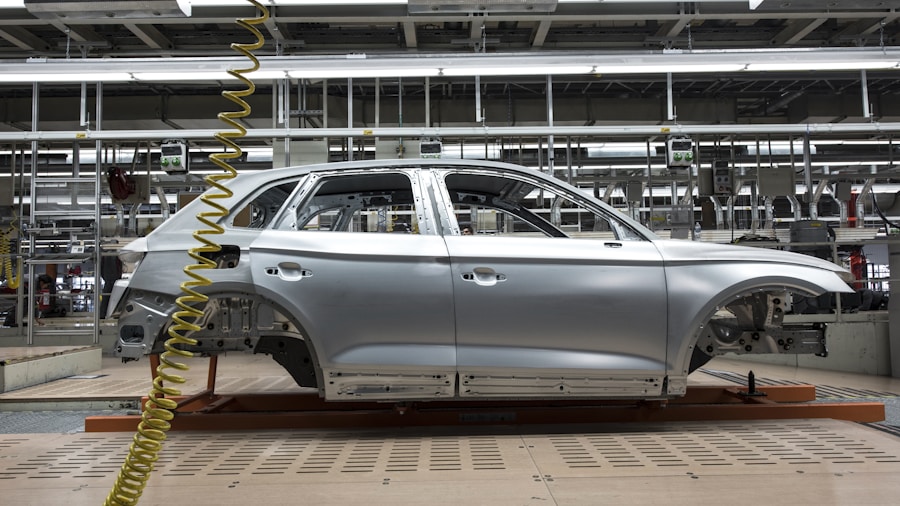
When Ford launched the all-aluminum F-150 in 2015, the company could draw upon more than two decades of accumulated knowledge about aluminum vehicle construction. While the direct connection between the 1994 AIV program and the eventual F-150 design remains unclear, the earlier testing provided a crucial proof of concept. Ford’s commitment to advanced materials extends across its entire lineup, with continuous innovation in vehicle engineering and technology.
The production F-150 underwent far more extensive testing than the AIV program, accumulating 10 million miles of validation testing. Ford even entered a disguised F-150 prototype in the legendary 2013 Baja 1000 off-road race to evaluate durability under extreme conditions. These comprehensive testing regimens ensured that aluminum body construction on the F-150 met the highest standards for strength, safety, and longevity that truck buyers expect.
The Legacy of Aluminum Innovation
The fate of those 20 original mercury Sable test vehicles remains a mystery. Whether any of these historically significant vehicles survive in private collections or company archives is unknown. Nevertheless, their contribution to automotive engineering remains valuable, representing a pivotal moment when Ford engineers proved that aluminum was viable for mainstream vehicle construction. Today’s Ford lineup continues to benefit from ongoing material innovations, as the company refines its approach to weight reduction and efficiency across various vehicle platforms.
For shoppers considering a modern Ford truck or SUV, understanding this engineering heritage demonstrates the extensive research and validation behind current aluminum body designs. The 1994 AIV program essentially laid the groundwork for the durable, lightweight vehicles Ford produces today. By choosing an aluminum-bodied Ford, buyers are benefiting from decades of proven engineering and real-world testing that began with those 20 experimental Mercury Sables nearly 30 years ago.








Write Your Review
No reviews yet. Be the first to share your experience!