

Tesla is scaling up production of its Optimus humanoid robot at a dramatic pace, ramping from dozens of units per week earlier this year to several hundred by August. The company aims to hit over 1,000 robots weekly by year’s end, eventually targeting 20,000 per week. Yet behind these impressive numbers lies a sobering reality: the robots rolling off the assembly line still cannot reliably perform the generalized tasks that would make them commercially viable.
This matters to consumers and businesses considering the future of automation and AI-driven robotics. Understanding where Optimus stands today versus what Tesla has promised reveals important gaps between hype and actual capability that could shape product availability, pricing, and timelines for years to come.
Production Speed Without Practical Capability
Tesla converted its Fremont facility, previously home to Model S and Model X assembly, into a dedicated Optimus manufacturing hub. This shift pulled hundreds of workers and engineers away from vehicle production to focus entirely on robot assembly. The speed of this transition underscores Tesla’s commitment to the project, but output volume tells only part of the story.
Most of the robots Tesla produces remain within the company for internal testing, training, and data collection. The units operating inside Tesla factories are confined to tightly controlled, heavily supervised areas and programmed for specific predefined tasks rather than functioning as true general-purpose machines. This represents a significant limitation compared to how humanoid robots are being marketed to the public: as flexible, adaptable systems capable of taking on diverse jobs.
Even more telling, the V3 version rolling off production lines today is not the model Tesla plans to commercialize. Future versions must clear stricter durability and reliability benchmarks before deployment to customers or commercial partners.
The Assembly and Design Challenges Holding Back Progress
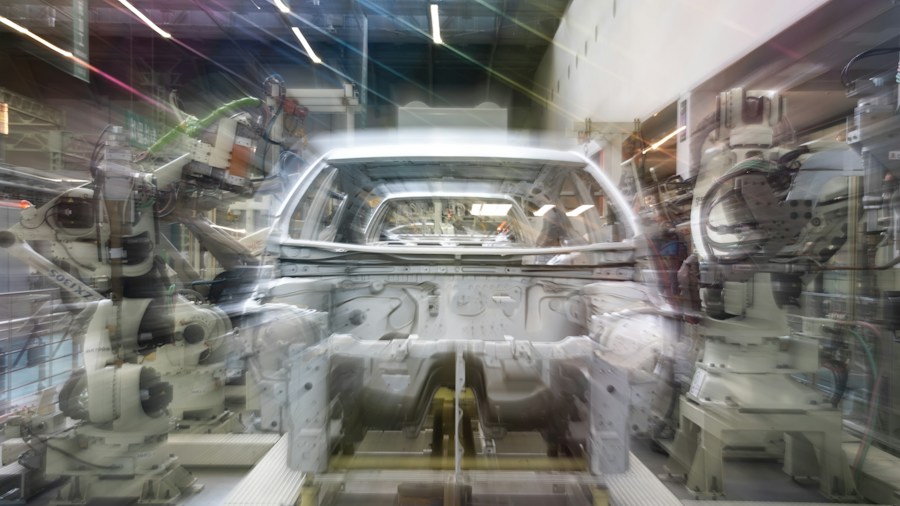
Creating a functional humanoid hand at scale has emerged as one of Tesla’s biggest technical obstacles. Each Optimus hand and forearm assembly contains over 100 screws and tiny components that workers still assemble by hand. The precision required for these parts exceeds anything Tesla has handled in automotive production. Assembly line fixtures struggle to consistently align components with such tight tolerances, forcing many completed robots to undergo rework before leaving the factory.
Durability issues compound the problem. Touch sensors embedded in the hands have exhibited reliability failures. Rather than redesigning the entire hand, Tesla plans to introduce a replaceable sensing glove in the coming year, a Band-Aid solution that acknowledges the underlying design hasn’t been perfected. Tesla also relies on external suppliers, many based in China, for motors and precision gears that drive the joints. While these suppliers can produce quality components in small prototype batches, maintaining consistent quality at higher production volumes has proven elusive.
The AI Problem Nobody Has Solved Yet
The most fundamental limitation involves the robot’s artificial intelligence. According to people with direct knowledge of the system, Optimus cannot yet reliably generalize across a wide range of tasks. Its behavior becomes unpredictable when encountering situations outside its training data. The robot reportedly needs several days of training to master even basic movements and tasks.
Tesla is attempting to build a library of fundamental movements that Optimus can recombine and adapt for new jobs. To fuel these AI models, the company has accumulated over 500,000 hours of training data and plans to double that figure by year’s end. Tesla has reassigned much of its self-driving annotation team to the Optimus project, hired dedicated data collectors equipped with camera helmets and motion-capture suits, and established training hubs in Colorado, Arizona, and Florida.
The company’s commercialization strategy mirrors its approach with Full Self-Driving: lease the hardware to a select group of companies whose factory and warehouse environments resemble Tesla’s own operations, making it easier for robots to adapt, while gathering real-world performance data to refine the software later. This playbook assumes the underlying AI will eventually catch up, but that outcome is far from guaranteed.
What This Means for the Timeline
Tesla’s track record on AI timelines raises legitimate concerns. In January 2025, CEO Elon Musk predicted the company would build about 10,000 Optimus robots that year with several thousand performing useful work by year’s end. When asked about progress in late 2026, he acknowledged that zero Optimus robots were doing useful work anywhere, yet continues pursuing similarly ambitious production targets.
This pattern mirrors Tesla’s approach to Full Self-Driving technology approval, which has required supervision for nearly a decade despite early promises of full autonomy. Meanwhile, competitors like XPeng have launched automated humanoid production lines targeting commercial sales in 2027, suggesting the race is intensifying regardless of Tesla’s current obstacles.
For consumers watching the robotics sector develop, the lesson is clear: production volume and AI capability are not the same thing. A robot that must be trained for days on each task and kept behind safety fencing is simply an expensive, less efficient version of a specialized robot built for a single job. True humanoid robots only become valuable once they can generalize across tasks and operate reliably over years without constant supervision and maintenance.
Tesla may eventually solve these problems, but the company is once again betting major factory capacity on software breakthroughs that remain unpredictable.











Write Your Review
No reviews yet. Be the first to share your experience!