

A Joke Becomes Reality: Roofed Scooters Are Coming
What started as an April Fools’ prank has officially become a real product heading to dealerships. Segway unveiled the X Cruiser at EICMA 2026, marking the first serious production run of a fully protective scooter with a roof, safety cage, and integrated seat belts. This isn’t a concept car that disappears after a motor show. Segway has committed to launching the X Cruiser in China and Europe between 2027 and 2028, making this one of the most unusual vehicles set to hit markets in the coming years.
The story behind the X Cruiser is surprisingly compelling. BMW originally created the C1 scooter back in 2000, combining motorcycle convenience with car-like protection through a roof and structural cage. Despite the innovative design, buyers largely ignored the concept, and production ended just two years later. In 2023, BMW jokingly announced a roofed version of its CE 04 electric scooter for April Fools’ Day, but that joke hinted at something BMW had been seriously exploring. The company released the Vision CE concept in 2025, another electric scooter with a protective cage and self-balancing technology, showing that BMW never truly abandoned the idea of combining two-wheel practicality with four-wheel-style safety.
Segway apparently took BMW’s decades-long vision seriously. The company is actually licensing two-wheeler technology and expertise directly from BMW to develop the X Cruiser, making this more than just a copycat design. Instead, it represents Segway’s interpretation of a concept that BMW spent years trying to prove had merit.
What the X Cruiser Actually Offers

The X Cruiser comes loaded with features that blur the line between scooter and small car. A protective cage surrounds the rider and passenger, while energy-absorbing structures and integrated seat belts provide structural safety. The scooter includes blind-spot detection and lane-change warning systems, features typically reserved for four-wheeled vehicles. Segway claims the X Cruiser will deliver nearly 124 miles of range per charge, with European models supporting 4.5 kW Type 2 AC charging for convenient home or public charging station use.
Practical touches include a 10.25-inch TFT touchscreen display as standard equipment, and buyers can opt for an electrically operated top box offering nearly two cubic feet of storage space. These features suggest Segway is positioning the X Cruiser not as a novelty, but as a genuine daily commuter for riders who need weather protection and cargo capacity.
Why This Matters for Shoppers
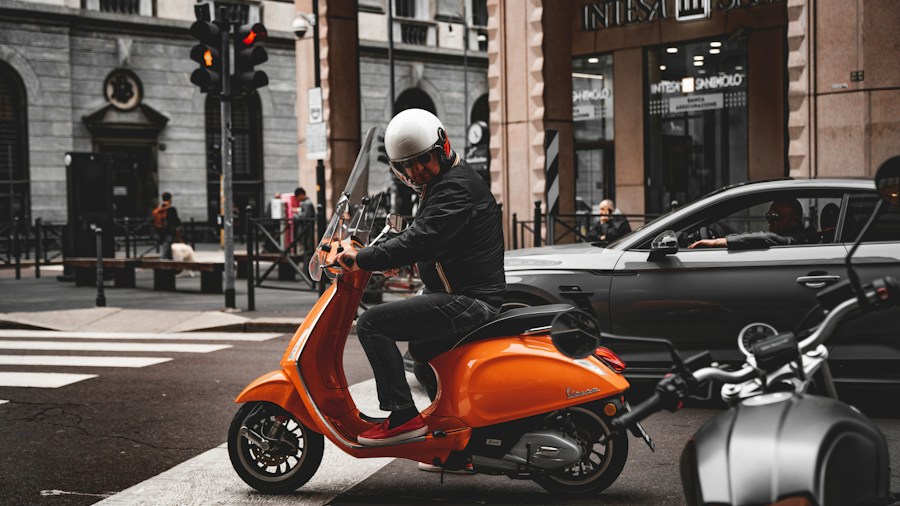
In parts of Asia and Europe, scooters serve as primary daily transportation rather than weekend fun machines. Riders use them for commuting, grocery shopping, and regular errands in all weather conditions. NIU electric scooters have already found significant success in European markets by addressing practical commuting needs, and Segway’s roofed approach could expand that appeal further.
A scooter that offers weather protection and additional safety features without sacrificing the convenience and fuel efficiency of two wheels could genuinely resonate with commuters tired of spending hours in car traffic. The compact footprint makes it easier to park than a full car, while the roof and safety cage address two major concerns many riders have about daily scooter use: exposure to elements and vulnerability in traffic.
However, shoppers should remain cautious. A protective cage doesn’t automatically provide the same safety level as a modern automobile, and Segway still needs to prove itself in real-world crash testing and long-term durability. As other manufacturers release advanced scooter platforms with new technology, the market for protected two-wheelers continues to develop.
The Real Question: Will Buyers Actually Want This?
BMW’s original C1 failed because it landed in markets where cars were affordable and practical. The X Cruiser arrives in a different context, targeting regions where scooters already dominate transportation and where adding weather protection and safety features solves genuine problems. Pricing and weight will be critical factors. If the X Cruiser becomes too expensive or too heavy to handle like a traditional scooter, it loses its practical advantage. Budget-conscious riders have increasingly raised concerns about tech overload on affordable scooter models, suggesting that affordability remains paramount.
What was once dismissed as a ridiculous idea might finally make sense. BMW’s original vision simply needed better technology, a more receptive market, and a company willing to take the risk. Segway is betting that risk will pay off, and they might be right. The real test comes when the X Cruiser hits roads between 2027 and 2028.








Write Your Review
No reviews yet. Be the first to share your experience!