

Pirelli is fundamentally changing how vehicles interact with tires through a groundbreaking technology called Cyber Tyre. After 25 years of development, this smart tire system embeds a tiny sensor inside the tire that communicates real-time data to your vehicle’s computer, allowing automatic adjustments to critical safety systems without any input from the driver.
How Cyber Tyre Works
The Cyber Tyre sensor, weighing just 13 grams, sits bonded to the inner liner beneath the tire tread using specially engineered adhesive and rubber housing. This miniature device continuously monitors temperature, air pressure, acceleration, and tire identification data, transmitting that information to the vehicle’s onboard computer systems. The sensor works alongside software technology from Bosch to adjust your vehicle’s ABS and traction control systems in real time based on what the tire is actually experiencing.
This represents a fundamental shift in how vehicles understand their tires. Traditional wheel speed sensors are mounted far from the road surface, but Cyber Tyre data comes directly from inside the tire where the rubber meets the road. That proximity to the contact patch gives your car genuinely useful information about tire performance as conditions change.
What This Means for Tire Performance
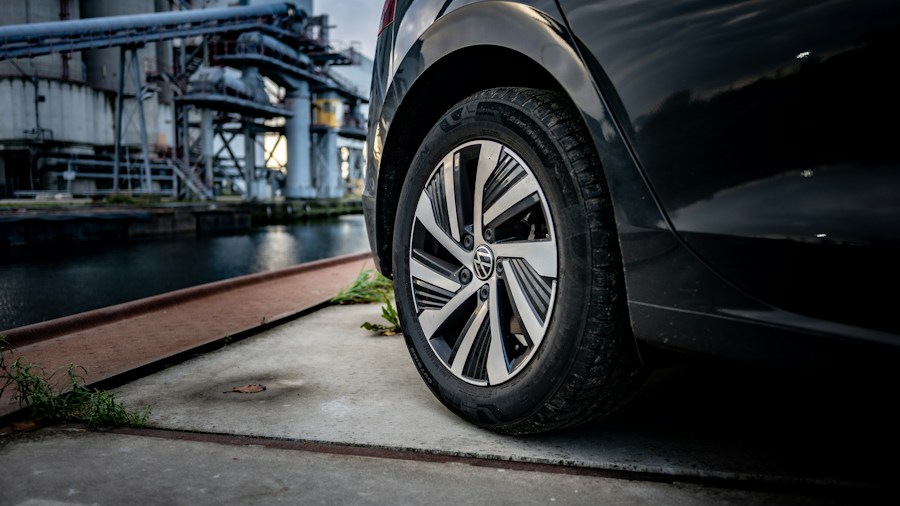
Imagine swapping from summer tires to winter rubber for the season. Today’s vehicles have no way to know you made that change unless you manually adjust drive mode settings. With Cyber Tyre technology, your car automatically recognizes the tire swap and recalibrates its electronic controls accordingly. No buttons to push. No settings to adjust. The vehicle simply delivers the right performance for the tires currently installed.
Tire performance differences between summer, winter, and all-season options are substantial, yet most vehicles are calibrated to a single baseline. Cyber Tyre allows different traction control targets for each corner of the vehicle, tailoring intervention to exactly what each tire can deliver at any given moment. During actual testing at a racetrack, vehicles equipped with Cyber Tyre showed measurably better acceleration control and stopping distance compared to vehicles using fixed calibrations.
Engineering Challenges Overcome
Building reliable electronics inside a tire presents extreme engineering obstacles. Tires experience constant flexing, wild temperature swings, and lateral forces exceeding 200 mph in some driving situations. Pirelli’s chief technical officer explained that a tire’s interior ranks among the harshest environments for electronics anywhere in a vehicle.
The company drew on expertise from its noise-cancelling tire technology to develop the manufacturing process. The sensor’s battery is designed to outlast the entire tire lifespan and enters low-power sleep mode during extended storage periods. This durability means the sensor requires no maintenance from the owner and will keep functioning throughout the tire’s operational life.
When You’ll See This Technology
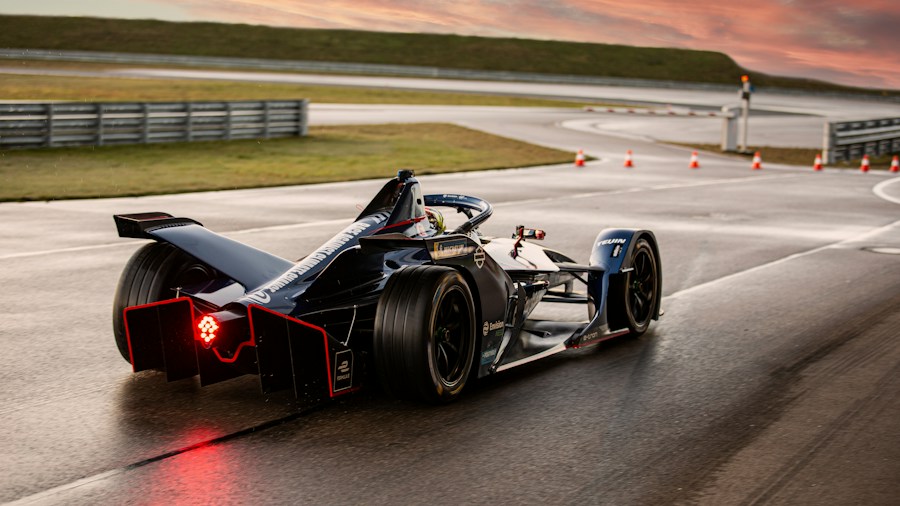
Cyber Tyre has already appeared in exclusive vehicles from McLaren and Pagani, but widespread adoption is coming soon. Pirelli executives announced that high-volume applications should be announced in the first half of 2027, with production expected in 2028. This timeline suggests the technology could eventually appear on common vehicles like pickup trucks.
Pirelli is investing approximately 1.2 billion dollars to expand its manufacturing facility in Rome, Georgia, where Cyber Tyre-equipped products will be produced alongside conventional tires. By 2033, the facility expects to reach annual production capacity of six million units while creating up to 1,000 engineering jobs. This massive infrastructure commitment signals that Pirelli views Cyber Tyre as a core technology rather than a niche experiment.
What This Means for Shoppers
For everyday drivers, Cyber Tyre offers tangible benefits. The technology automatically optimizes braking and acceleration without requiring you to understand or remember to switch drive modes. As tires wear over their lifespan, the system continuously adapts to changing performance characteristics. Fleets managing hundreds of vehicles gain new tire-wear monitoring capabilities that simplify maintenance scheduling and reduce overall costs.
However, Cyber Tyre is not designed to eliminate driver choice entirely. Performance drive modes that adjust suspension stiffness or exhaust characteristics will remain. The technology specifically addresses traction-related control systems where automatic adjustment based on actual tire conditions can deliver measurable improvements. Some redundant drive mode options may eventually become unnecessary, but the core capability to let drivers customize their driving experience will persist.
The U.S. government recently authorized Pirelli to market Cyber Tyre domestically following clarifications about data security and governance. This approval paves the way for rapid adoption across the American market in the coming years. As these sensors become standard on mainstream vehicles, tire technology and vehicle dynamics will become increasingly connected and intelligent.










Write Your Review
No reviews yet. Be the first to share your experience!