

What Is VTEC and Why Does It Matter?
In the 1980s, engine designers faced an unsolvable problem: build an engine for smooth low-speed driving or tune it for high-RPM power. Drivers had to choose one or the other. Honda solved this dilemma with VTEC, a purely mechanical system that allowed a single engine to deliver both everyday usability and genuine performance. The technology debuted in 1989 and became so influential that it reshaped how the automotive industry thought about valve control.
VTEC stands for Variable Valve Timing and Lift Electronic Control. Rather than relying on turbochargers or complex computer systems, Honda’s engineers created an ingenious solution using three rocker arms and hydraulic pressure. The system was so effective that it set the standard for performance engines and continues to influence modern Honda vehicles today.
The Engineering Behind the Magic
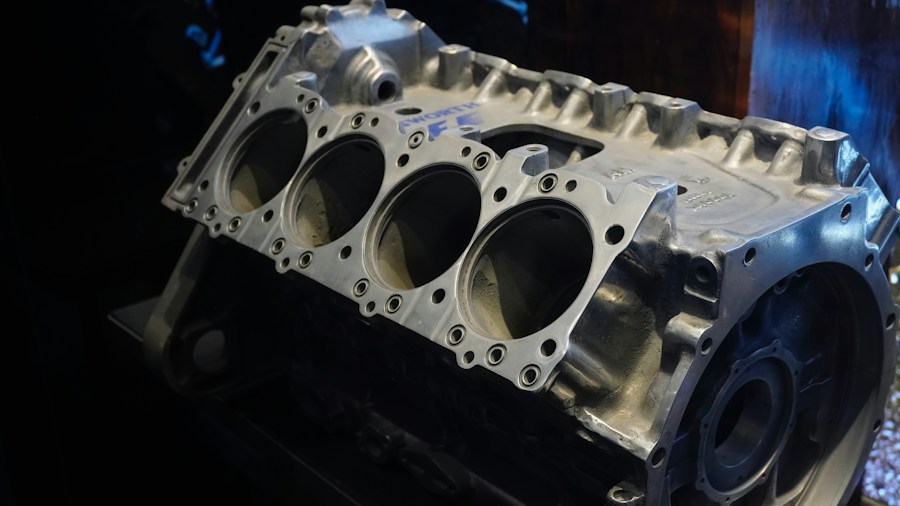
At its core, VTEC solved a fundamental valve-train problem. A fixed camshaft requires compromise: if valves open wide and stay open long for high-speed power, the engine runs poorly at low speeds. If valves are optimized for smooth idling and city driving, the engine cannot breathe properly at higher revolutions.
Honda’s solution employed three cam lobes and three rocker arms for each pair of intake and exhaust valves. The two outer cam lobes controlled normal operation, delivering conservative valve timing that kept the engine running smoothly during everyday driving. Between them sat a third cam lobe with an aggressive profile designed for higher engine speeds and greater airflow demands.
When the engine’s computer determined the moment was right, usually around 5,700 to 5,800 RPM depending on the model, it triggered a solenoid valve. Pressurized engine oil flowed into the rocker-arm mechanism, pushing small locking pins that locked all three rocker arms together as a single unit. Suddenly, the aggressive middle cam lobe took control, forcing both valves to open wider and stay open longer. This enabled much greater valve overlap and airflow at exactly the moment when drivers needed it most. The transition was so audible that drivers heard a distinct kick as the system engaged.
Type R Engines Proved the Technology
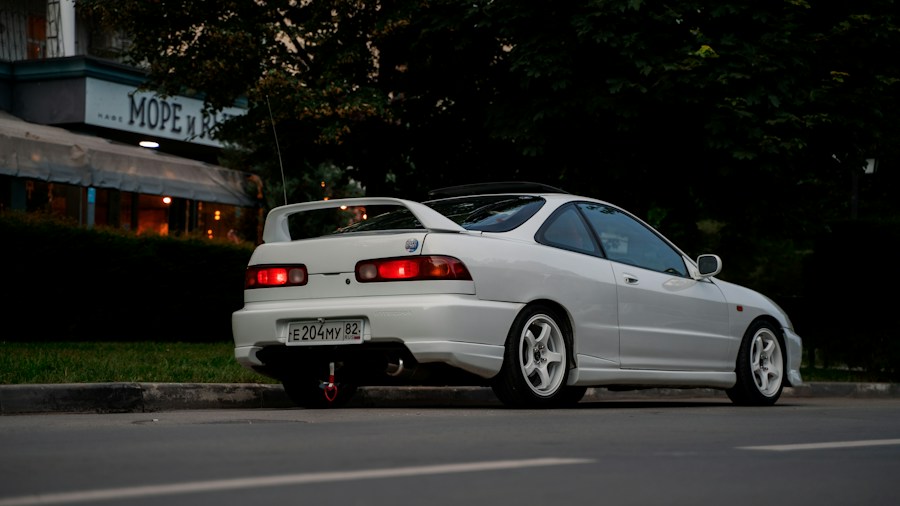
Honda truly demonstrated VTEC’s potential through its Type R performance division. The 1997 Integra Type R arrived with a naturally aspirated 1.8-liter four-cylinder engine producing 195 horsepower and 130 lb-ft of torque, pushing all the way to 8,400 RPM without forced induction. This was remarkable engineering: a small-displacement engine that could sustain exceptional rotational speeds while remaining durable enough for daily driving.
The simultaneous EK9 Civic Type R, sold in Japan, proved the formula worked at smaller displacements too. Its 1.6-liter engine generated approximately 182 horsepower at 8,200 RPM. Both engines featured hand-polished cylinder-head ports, forged steel crankshafts, oil-cooled pistons, and special bearing materials. Honda’s Type R tradition continues today with modern performance variants, but the VTEC foundation remains part of that heritage.
These engines proved their worth in competition. RealTime Racing campaigned the Integra Type R in professional racing between 1997 and 2002, accumulating 23 race victories, five drivers’ championships, and four manufacturers’ titles. The combination of VTEC, close-ratio transmission, and helical limited-slip differential created a machine that excelled on track while remaining practical on the street.
Why VTEC Still Matters for Shoppers Today
VTEC became an internet joke among enthusiasts who would proclaim “VTEC just kicked in, yo” whenever the system engaged. But beneath the humor lay genuine performance benefit. By keeping the engine in its strongest operating range, VTEC improved acceleration, track performance, and overall driving satisfaction in ways turbocharging alone could not match at the time.
What made VTEC truly impressive was its mechanical simplicity. Unlike modern variable valve timing systems that use continuous electronic adjustment, the original VTEC required only an electronic control unit, a solenoid valve, precisely machined locking pins, and carefully designed rocker arms. This simplicity made the system reliable and straightforward to maintain.
Honda later evolved VTEC into i-VTEC, adding continuous camshaft timing adjustment rather than a simple two-profile switch. Modern engines now use far more sophisticated electronic controls and forced induction. Yet the original VTEC demonstrated that extraordinary naturally aspirated performance and everyday reliability could coexist in a small-displacement engine.
Honda’s heritage of innovative engineering stretches back decades, and VTEC represents one of the company’s most significant achievements. For buyers considering Honda performance models or evaluating used Type R vehicles, understanding VTEC helps explain why these engines command respect among enthusiasts and engineers alike. The system proves that clever mechanical design can solve problems that many believed required expensive computer systems or turbochargers.










Write Your Review
No reviews yet. Be the first to share your experience!