

Over the past five years, manufacturers have issued recalls on roughly 3.1 million tires across the United States. Yet fewer than one in ten of those tires have actually been replaced or removed from service. The gap between recalled tires and tires that reach owners represents a major safety blind spot in the automotive industry, and understanding this problem matters if you’re behind the wheel.
Why Recalls Fail to Reach Most Drivers
The root cause of this massive gap lies in how the tire industry tracks and traces products. When an automobile manufacturer recalls a vehicle, the connection is straightforward: cars are registered with state motor vehicle departments, which maintain detailed records including the owner’s address, vehicle identification number, and license plate. A recall notice arrives in the mail within weeks.
Tires operate under a completely different system. Each tire carries a Department of Transportation identification number, or DOT code, printed in raised characters on the sidewall. This code has been required by law for more than five decades and contains all the information needed to trace a tire from manufacturer to retailer to vehicle owner. In theory, tracking a recalled tire should be just as simple as tracking a recalled car. In practice, it rarely works that way.
The problem starts on the shop floor. A DOT code consists of thirteen characters embossed in black rubber against a black background, difficult to read by flashlight during a busy service day. Technicians may misread the code, type it incorrectly, or forget to record it altogether. Many shops never capture the DOT number at the point of sale, which means when a recall is issued, there is no record linking that specific tire to a specific customer. Without that connection, the recall notice never reaches the driver who needs it most.
The Technology That Could Close the Gap

The solution already exists and requires no new equipment. Smartphone cameras paired with specialized scanning software can now read and record tire DOT codes automatically, bypassing the errors and omissions that plague manual entry. The process takes seconds: a technician points their phone at the tire sidewall, and the complete DOT number, along with the production date, is captured and sent directly to the shop’s system in perfect accuracy.
When a shop implements this scanning capability, each scan accomplishes three critical tasks at once. It registers the tire immediately at the point of sale, creating a permanent record in the system. It enables the shop to run automated recall checks every time that vehicle returns for service. And it captures the tire’s manufacturing date, allowing technicians to assess whether the tire is too old to be safely returned to the road. These capabilities are not theoretical: major tire retailers across the country have been using smartphone-based DOT scanning for several years now, and the total number of tires scanned has surpassed 100 million inspections.
Beyond the DOT: Complete Tire Assessment
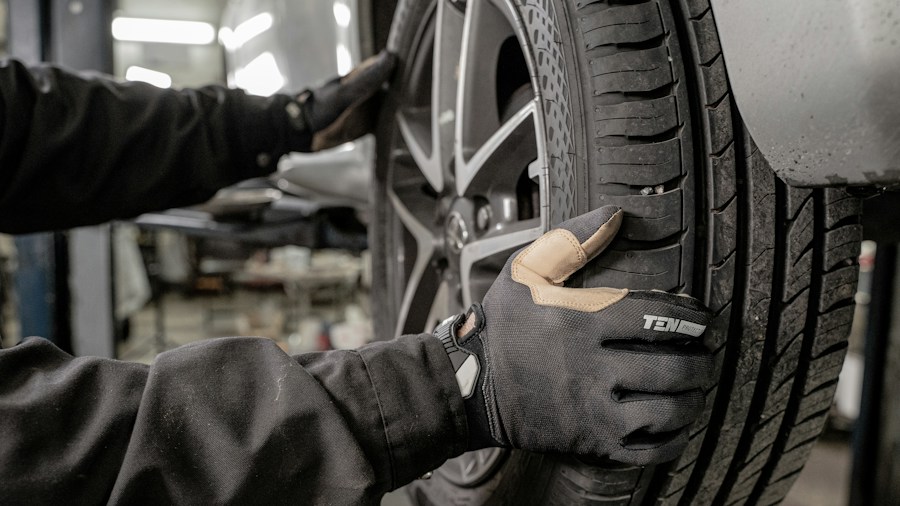
Modern scanning technology does more than just read the DOT number. Advanced systems can capture the entire tire sidewall in a single photo, identifying size, brand, model, load rating, speed rating, and markings for winter and run-flat capability. The same smartphone can measure tread depth to a precision of 1/32 of an inch by analyzing thousands of points across the tire surface, far more accurate than the traditional penny test or single-probe gauge.
This comprehensive approach to tire data collection creates a detailed record of every tire’s condition and history. When combined with automated recall monitoring, it transforms a tire shop from a repair facility into a safety checkpoint. Independent shops now offer dealership-level tire service by implementing these systems, allowing even smaller retailers to match the precision and recall responsiveness of large chains.
What This Means for You as a Shopper
If you buy replacement tires today, you should ask your retailer whether they capture and record your tire’s DOT number at the time of purchase. This simple documentation is your best protection against driving on a recalled tire without knowing it. When you return for routine maintenance, the shop should be able to quickly verify whether any of your tires are subject to active recalls and notify you immediately if they are.
The technology to solve this problem is not expensive and does not require any special equipment beyond the smartphones that technicians already carry. What has been missing is the data capture step, and that absence has allowed millions of potentially unsafe tires to remain on American roads. Shops that adopt these scanning practices are taking a meaningful step toward closing a significant gap in automotive safety. As a consumer, supporting retailers who invest in these systems sends a clear signal that safety matters to you and encourages the industry to make the right choice.











Write Your Review
No reviews yet. Be the first to share your experience!