

General Motors has completed an unprecedented safety validation program for the 2027 Chevrolet Silverado 1500, running approximately 92,000 computer-based crash simulations during development. This massive testing initiative represents a fundamental shift in how truck manufacturers approach safety engineering, and the results carry real implications for shoppers considering one of America’s most popular pickup trucks.
How Many Crashes Really Happened
The numbers tell a striking story. Of the roughly 92,000 total crashes tested, nearly 92,000 occurred in virtual environments. Physical crash tests at GM’s Michigan proving ground numbered around 50, meaning engineers ran roughly 1,800 computer simulations for every real-world barrier impact. This 80-20 split between virtual and physical testing dramatically accelerates the discovery and refinement of safety features before expensive hardware prototypes are destroyed.
The computational work generated nearly 2 petabytes of data, equivalent to approximately one trillion pages of text. This enormous dataset allows AI systems to identify patterns and predict failure modes, though GM emphasizes that artificial intelligence supports rather than replaces human engineering judgment.
What Virtual Testing Revealed
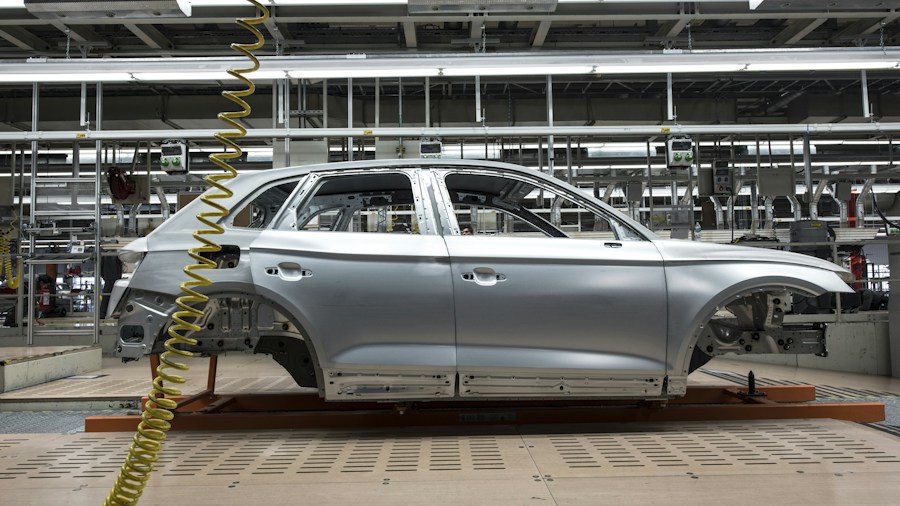
Computer-based crash simulations allowed engineers to test thousands of variables that would be impractical or prohibitively expensive to explore physically. The team adjusted material thickness, joint geometry, impact angles, and even the size and seating position of occupants to understand how different people would fare in various collision scenarios. Issues that might take months to diagnose and fix in the physical world surface on screens in weeks, accelerating the design iteration process.
According to Regina Carto, GM’s vice president of global product safety, systems and certification, this methodology enables teams to identify structural weaknesses and occupant protection gaps far earlier in the development cycle than traditional approaches allow. Problems get corrected at the digital level before any sheet metal gets fabricated.
The Rear Seat Focus That Matters
The virtual testing highlighted a specific vulnerability that guided redesign priorities for the 2027 model. Previous Silverado generations, particularly the Crew Cab configuration, earned poor ratings from the Insurance Institute for Highway Safety in moderate overlap frontal tests, with particular weakness in rear-seat protection for head, neck, chest and restraint performance.
GM responded by installing rear seatbelt pretensioners that cinch occupants snug at the moment of impact, restructuring the rear seating area, and incorporating a redesigned frame with boxed sections for added rigidity. These improvements represent systematic enhancements aimed at addressing a problem affecting full-size trucks across the industry.
What This Means for Buyers Today

The 2027 Silverado 1500 begins at $41,395 including destination charges. The National Highway Traffic Safety Administration has selected the Crew Cab configuration for its standard 5-Star Safety Ratings test program, but official scores remain pending as of late November. The Insurance Institute for Highway Safety has not yet released ratings for the new generation either.
This timing matters. While GM’s internal testing appears thorough and well-documented, independent crash test results from NHTSA and IIHS will ultimately determine how the new truck performs against competitor benchmarks and previous generations. Shoppers should wait for these third-party evaluations before concluding whether the safety redesign delivers measurable real-world benefits.
The reliance on virtual testing does raise a legitimate question: how well do simulations predict actual physical performance? GM’s approach of running roughly 1,800 virtual tests per physical test suggests confidence in the correlation, and the physical tests serve as validation checkpoints. Consumers evaluating any new vehicle should consider both manufacturer claims and published third-party crash ratings before making a final decision.
The Bottom Line
GM’s investment in advanced simulation technology reflects the industry’s broader shift toward digital-first engineering. For truck buyers, this means manufacturers can explore more design variations and safety scenarios during development, potentially resulting in better real-world crashworthiness. However, the ultimate proof remains the official test results from independent agencies. Shoppers considering the 2027 Silverado should monitor for NHTSA and IIHS ratings once they become available, as those scores will reveal whether the extensive virtual testing translated into measurable safety improvements compared to competitors and previous models.











Write Your Review
No reviews yet. Be the first to share your experience!