

When Ram set up an off-road demonstration course at the 2026 Oklahoma State Fair, the truck brand intended to showcase what modern pickup engineering can accomplish on rough terrain. Instead, the event delivered an unexpected lesson about vehicle capability and consumer expectations in the off-road market. A nearly century-old 1928 Ford Model A sedan, bone-stock and unmodified, navigated the course designed for current-generation trucks without breaking a sweat, raising uncomfortable questions about how manufacturers market toughness today.
What Happened at the Oklahoma State Fair
The demonstration featured a short obstacle course with dirt moguls and uneven terrain typical of manufacturer showcase events. Modern Ram pickups were meant to demonstrate their off-road prowess to fairgoers and potential buyers. However, when organizers allowed the owner of a pristine 1928 Ford Model A to attempt the same course, the vintage sedan completed it cleanly, its suspension flexing appropriately and tires maintaining traction throughout. Video documentation of the event circulated online, drawing hundreds of comments noting the irony of an antiquated passenger car outperforming or at least matching the capabilities implied by modern truck advertising.
Why a Model A Can Handle Modern Off Road Challenges

The Ford Model A, produced during the late 1920s, was engineered when paved roads were rare rather than standard. Vehicles of that era had to manage unpaved surfaces, deep ruts, and challenging terrain as everyday conditions. The suspension geometry and ground clearance that made the Model A practical for Depression-era America translated directly into legitimate off-road capability. Though this particular example is a sedan rather than the truck variant Ford offered on the Model A chassis, the fundamental design principles remain intact. The vehicle demonstrates that basic engineering fundamentals for terrain management have remained largely unchanged for nearly a century.
What This Means for Off Road Shoppers
The implications for consumers shopping in today’s off-road market are significant. While modern off-road vehicles like those entering the market from Acura offer advanced technology and capability, the Model A incident suggests that marketing claims around toughness and capability deserve scrutiny. Manufacturer demonstration courses are intentionally modest, designed to be achievable by average drivers with minimal experience while minimizing damage risk. They are portable, easily constructed on fairgrounds, and approachable for visitors unfamiliar with serious off-road driving. However, the same modesty that makes these courses safe and accessible also means they do not represent legitimate performance comparisons.
The embarrassment factor for Ram lies not in any genuine mechanical failure but in the messaging gap. When a vintage sedan performs equivalently to current trucks on the same obstacle course, it undermines the narrative that modern engineering has dramatically advanced off-road capability. It suggests either that modern truck performance gains are incremental rather than revolutionary, or that the demonstration itself was too simple to meaningfully differentiate vehicles. While competitors like the Bronco have built reputations on genuine off-road performance, this situation illustrates how carefully manufacturers must calibrate their messaging.
Real World Off Road Capability Differences
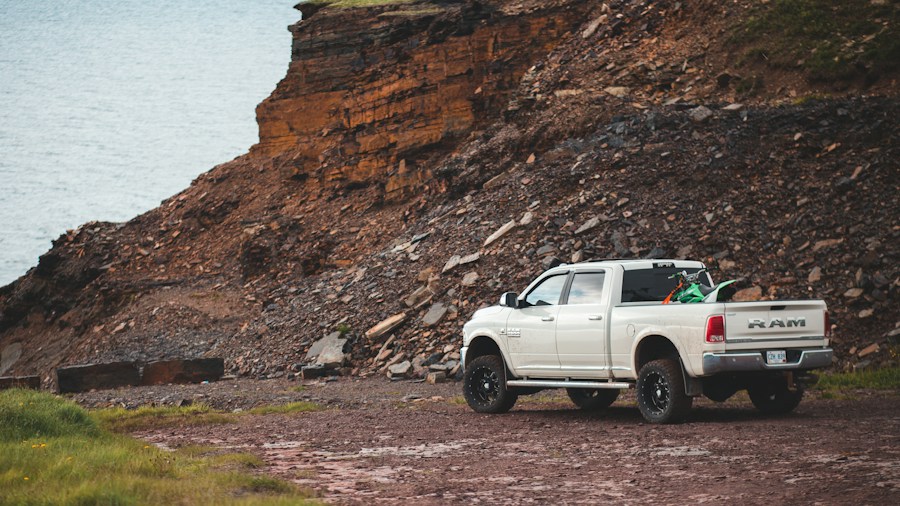
To be fair, modern trucks absolutely outperform a 1928 Model A in numerous meaningful ways. Electronic traction control, modern tire technology, engine power delivery, and advanced suspension systems give current vehicles advantages in challenging conditions the Model A would struggle with. High-speed terrain, extreme obstacles, recovery situations, and sustained performance over long distances all favor contemporary engineering. The Model A would likely fail in scenarios involving deep water crossings, extreme rocks, or aggressive high-speed maneuvers. Modern trucks also offer driver comfort, reliability, and safety features incompatible with century-old vehicles.
The broader lesson centers on the disconnect between marketing claims and real-world demonstration. Even vehicles designed for specialized use cases require honest demonstration to maintain credibility with consumers. Shoppers evaluating off-road capability should demand more challenging tests than promotional fairground courses. Seek out professional reviews that include serious obstacles, extended duration testing, and comparative performance metrics.
Shopping Smart for Off Road Vehicles
When researching off-road trucks and SUVs, recognize that manufacturer demonstrations prioritize safety and accessibility over genuine performance validation. Read independent reviews from outlets that conduct thorough testing on actual terrain. Evaluate specific features relevant to your intended use: electronic locking differentials, approach and departure angles, water crossing depths, payload capacity, and towing capability. Visit dedicated off-road parks to observe multiple vehicles performing genuine challenges. The vintage Model A’s surprising performance serves as a reminder that automotive capability depends on fundamental engineering principles, not just marketing polish or latest-year model status.









Write Your Review
No reviews yet. Be the first to share your experience!