

Cadillac’s Formula 1 effort at the Azerbaijan Grand Prix revealed a team finding ways to compete while facing real performance limitations. Sergio Perez delivered the franchise’s most encouraging performance of the season, proving that smart driving and consistency can make a difference even when the machinery is not among the fastest on the grid.
Perez Delivers Strong Performance in Difficult Circumstances
Perez turned in what he described as one of his strongest weekends in Baku, a circuit where he has previously won and claimed multiple podiums. Despite qualifying setbacks caused by poor timing and yellow flag complications, Perez maintained contact with faster cars throughout the race and finished competitive in the lower midfield.
The Cadillac driver was candid about the team’s limitations. His MAC-26 machine lacks the straight-line speed necessary to keep pace with competitors during overtake situations, a fundamental disadvantage that costs time on the long straights characteristic of the Baku City Circuit. Yet rather than surrender, Perez managed his tires, executed clean driving, and stayed mentally sharp through the entire race distance.
“The way I felt like I was running, if anything went wrong at any corner, I would have put it in the wall, so when you do a race like this you feel really proud,” Perez said. “We’re fighting cars that are one or two seconds faster than us, and we were able to stay with them in the first stint.” This kind of performance matters because it demonstrates that Cadillac has drivers capable of maximizing whatever competitive window exists.
What the Cadillac Situation Means for Buyers
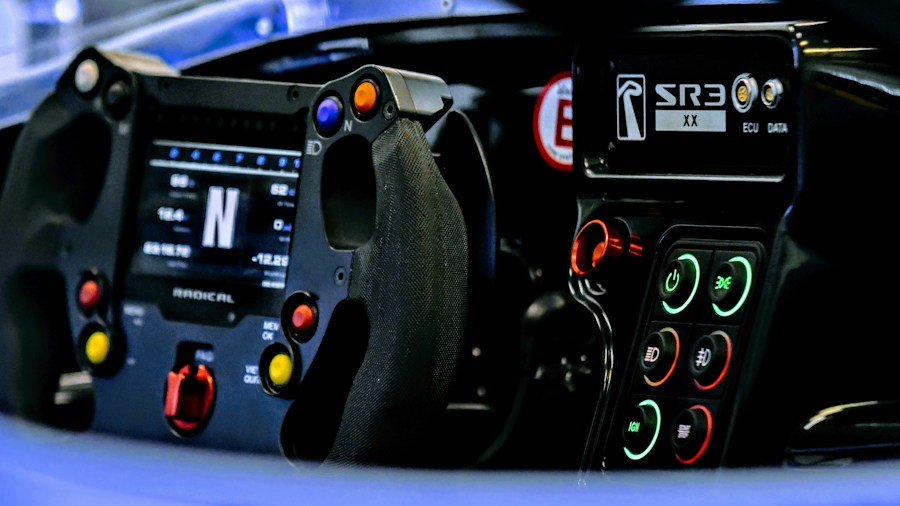
For consumers considering Cadillac road vehicles, the F1 program serves as a real-world test bed for engineering and driver development. While the street versions are completely different machines, the racing effort shows the brand’s commitment to competitive performance and continuous improvement. The 2026 Cadillac CT5-V Blackwing customization program offers buyers a chance to experience performance tuning options that benefit from motorsports insight.
Cadillac’s F1 team openly acknowledges that significant aerodynamic and mechanical deficiencies require major upgrades rather than quick fixes. The company is not hiding from the challenges or pretending performance is better than it is. This transparency about what needs fixing reflects the kind of honest engineering approach that filters down to production vehicle development.
Bottas Struggles While Progress Planning Continues
The weekend was not uniformly positive for Cadillac. Teammate Valtteri Bottas had a difficult time, running substantially off the pace and eventually crashing into the wall at Turn 15 late in the race. Bottas reported that his car’s systems became confused after a lockup forced him wide, and he subsequently lost rear brake harvesting capability when attempting to recover.
Bottas has underperformed relative to Perez throughout the season, sometimes running a full second per lap slower. This disparity suggests either setup differences, driving approach variations, or equipment issues that the team must resolve heading into upcoming races.
The Path Forward for Cadillac
Cadillac’s leadership has been realistic about timelines for meaningful improvement. Consumer research shows that Cadillac vehicles now offer compelling value propositions compared to other luxury brands, and the same no-excuses mentality appears in the racing program.
The team currently holds zero points in the constructors’ championship and faces an uphill battle for the remainder of the season. Engineers have identified that straight-line speed and aerodynamic efficiency are the primary culprits limiting competitiveness. These are not quick repairs but rather fundamental issues requiring design work and wind tunnel development.
What emerged from Azerbaijan is that Cadillac possesses the driver talent and mechanical competence to maintain racing operations and occasionally punch above weight class through clever strategy and execution. Perez’s performance proved that even in a disadvantaged car, a professional driver can still deliver competitive results.
For road car buyers, this persistence in motorsport despite current limitations sends a positive signal about the brand’s character. Companies that race honestly and work through challenges transparently tend to bring that same approach to customer vehicles. Recent cooling system improvements across the XT5 and XT6 lineup demonstrate Cadillac’s willingness to address identified issues comprehensively.
The Azerbaijan Grand Prix served as a reminder that success in motorsport isn’t only about having the fastest car. Sometimes it’s about maximizing what you have, maintaining professionalism under pressure, and never surrendering. That’s a lesson that applies both on the racetrack and in the showroom.











Write Your Review
No reviews yet. Be the first to share your experience!