

The Hidden Technology Behind Your Vehicle’s Original Equipment Tires
When you buy a new car or truck, the tires that come from the factory have been engineered specifically for that vehicle. Unlike aftermarket tires you might choose yourself later, original equipment (OE) tires are designed to work with the exact suspension, weight distribution, and performance characteristics of the model they’re installed on. But how do manufacturers ensure these tires meet such precise requirements? The answer lies in a combination of cutting-edge digital tools and real-world testing that happens long before you ever drive home from the dealership.
Virtual Testing Is Revolutionizing Tire Development

Tire manufacturers have increasingly turned to computer simulation and virtual testing during the early stages of OE tire development. Rather than immediately building physical prototypes, engineers now use advanced simulators to evaluate how a tire design will perform in terms of handling characteristics, noise levels, and rolling resistance. This approach allows them to test hundreds of design variations quickly and cost-effectively before committing resources to manufacturing actual test samples.
Major manufacturers recognize that virtual testing dramatically accelerates the development timeline while reducing waste. Simulators can model how a tire will interact with different road surfaces, weather conditions, and driving scenarios without requiring a single test vehicle to hit the track. Engineers can adjust tread patterns, rubber compounds, and sidewall structures in the software and instantly see how those changes affect performance metrics.
From Digital Models to Real-World Validation
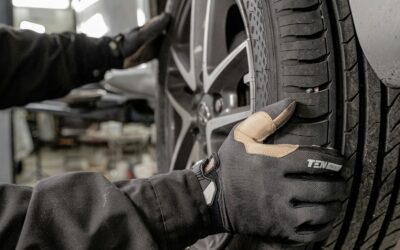
Virtual testing is only the first step. Once computer simulations show promise, tires move into laboratory testing environments where manufacturers can precisely measure performance under controlled conditions. Rolling resistance, traction, durability, and braking power are all evaluated on specialized testing equipment. Modern shop technology and testing equipment continue to evolve, reflecting how seriously the industry takes validation and safety.
But laboratory results do not always translate perfectly to what drivers experience on actual roads. That is why manufacturers conduct extensive real-world driving assessments with prototype tires fitted to test vehicles. During these evaluations, engineers push the tires to their limits on different surfaces, in various weather conditions, and across the full range of driving scenarios the vehicle will encounter during its lifetime. These tests help confirm that simulated performance data matches actual road performance.
Balancing Multiple Performance Priorities

OE tire development requires manufacturers to juggle several competing priorities. Safety is always paramount, but engineers also must minimize rolling resistance to support fuel economy, reduce noise for interior cabin comfort, and increasingly incorporate sustainability considerations into their designs. The specific balance of these priorities varies depending on the vehicle type, the market where it will be sold, and emerging technologies like electric vehicles that place different demands on tires.
For example, electric vehicles typically require tires engineered for different weight distribution and rolling characteristics compared to gasoline-powered vehicles. Luxury vehicles might prioritize quiet operation, while commercial trucks emphasize durability and load capacity. Manufacturers use virtual testing to quickly explore how different design choices affect each of these factors, helping them arrive at the optimal tire for a specific vehicle application.
What This Means for Your Tire Purchases
Understanding OE tire development matters to you as a shopper because it explains why the tires on your vehicle are not random choices. They have been scientifically engineered to perform a specific way with your car or truck. When it comes time to replace them, recognizing that your vehicle’s original tires were developed through this rigorous process helps you make informed decisions about replacement options.
Keeping your tires properly maintained also matters more than many drivers realize. Tire promotions and rebates frequently come available, but before upgrading to different tires, understand that proper inflation significantly affects performance. According to the U.S. Department of Energy, maintaining correct tire pressure can improve fuel economy by up to 3 percent, while underinflated tires create excessive rolling resistance that forces your engine to work harder.
As tire manufacturers continue refining their virtual testing methods and as new vehicle technologies emerge, the gap between engineered performance and real-world results continues to narrow. For shoppers, this means better-engineered tires that deliver the specific performance characteristics your vehicle needs. The next time you purchase replacement tires, you will understand that those OE tires on your vehicle represent months of sophisticated engineering, simulation, and real-world validation work.









Write Your Review
No reviews yet. Be the first to share your experience!