

A Massive Vintage Engine Meets Modern Truck Power
A YouTuber specializing in restoring vintage industrial and military equipment recently tackled one of the most ambitious projects imaginable: bringing a 102.4 liter Mirrlees Blackstone JS8 turbodiesel engine back to life. This straight-eight engine, originally delivered to the Royal Air Force in 1953, hadn’t run in decades and presented challenges that would require more than standard tools and techniques to overcome. What makes this story relevant to pickup truck owners is how the restoration team ultimately solved a critical startup problem, demonstrating just how capable modern trucks can be when pushed to their limits.
Understanding the Engine and Its History
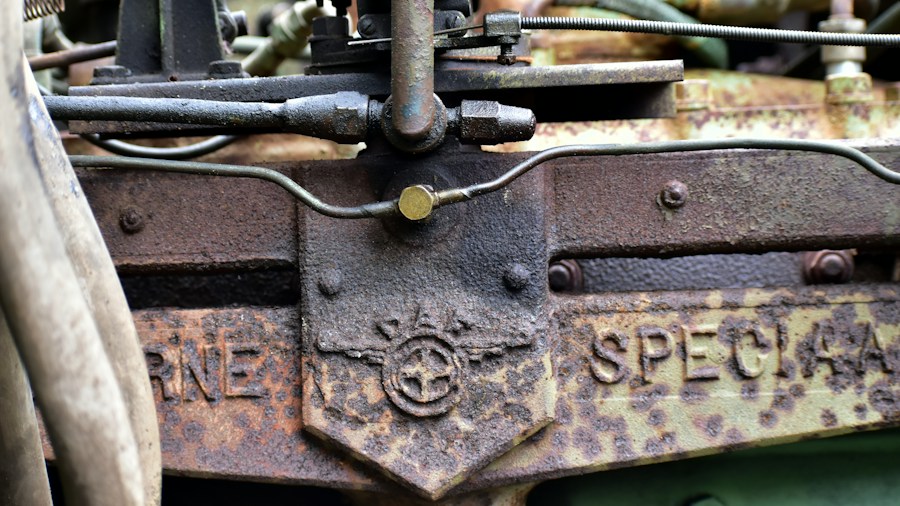
The Mirrlees Blackstone JS8 is a stationary powerplant that was likely used as part of a generator set on a Royal Air Force base, providing emergency backup power. With a displacement nearly four times larger than famous military engines from the same era, this machine represents an engineering achievement from a bygone age. The engine had accumulated only 720 hours of operating time since its manufacture over 70 years prior, suggesting it saw limited use before being retired. However, prolonged storage created the kind of problems that affect any internal combustion engine left dormant: stuck valves, inoperable fuel injectors, and an oiling system compromised by water that had to be manually extracted from every passage.
The Startup Challenge and Creative Solution
Starting such a massive engine required conventional wisdom: compressed air injection systems are the standard method for engines of this size. However, the available compressed air supply proved insufficient to turn the engine over. The restoration team then attempted to use a forklift to manually rotate the massive flywheel by hand, a method that also fell short. After exploring multiple approaches, they arrived at an unconventional but effective solution: securing a ratchet strap around the flywheel and using a Ford F-150 pickup truck to provide the mechanical force needed to finally crank the engine to life.
This real-world demonstration highlights the raw pulling power that modern pickup trucks possess. A vehicle designed primarily for hauling cargo and towing trailers proved capable of generating enough torque to turn a flywheel on a 102 ton industrial engine. The method succeeded where other approaches had failed, showcasing the mechanical advantage and sheer force output that contemporary pickup truck engineering delivers. For buyers evaluating pickup trucks, understanding this capability reminds us that these vehicles carry significantly more pulling and pushing force than most regular driving situations ever require.
What This Means for Pickup Truck Shoppers
While most pickup truck buyers will never need to start a 1950s military generator engine, this restoration story underscores the engineering principles that make modern trucks such capable machines. When you’re comparing pickup truck models and specifications, the towing and hauling capacities listed in brochures represent real-world engineering margins. A truck rated to tow 10,000 pounds or more has structural, powertrain, and suspension systems designed with substantial safety factors built in.
For practical purposes, pickup truck buyers should recognize that today’s trucks are engineered with considerable reserve capacity. This means when you select a truck for your actual needs, whether hauling building materials, towing a boat, or managing everyday family duties, you’re choosing a vehicle with engineering well beyond those specific applications. That reserve capacity contributes to longevity and reliability over time. Additionally, understanding truck capability helps shoppers make informed decisions about which model meets their needs without oversizing unnecessarily. Proper truck selection depends on your actual requirements, not on impressing others with maximum payload ratings. If you own a pickup truck, learning how to maintain its systems properly is essential. Resources like winterization guidance help keep your truck in peak condition across seasons.
Engineering Excellence Across Generations
The successful startup of this vintage engine also demonstrates how consistent the fundamental principles of internal combustion engineering have remained. Whether we’re discussing a 1953 stationary diesel or a 2024 pickup truck diesel engine, the basic concept, controlled fuel combustion driving pistons and crankshafts, remains unchanged. However, modern emissions controls, fuel injection systems, and electronic management have made today’s engines far more efficient and reliable. Today’s pickup trucks benefit from over a century of continuous refinement to this basic principle. If you’re shopping for a truck with exceptional towing capability, innovations in hybrid powertrains represent the next evolution of truck engineering.
For consumers in the pickup truck market, this vintage engine restoration serves as a reminder of how durably engines are built when properly designed and maintained. Modern trucks, constructed with contemporary materials and manufacturing techniques, offer even greater longevity potential than their predecessors. Investing in a quality pickup truck from a reputable manufacturer means purchasing a vehicle engineered to handle years of dependable service. The fact that a 70 year old industrial engine could be restored to operation speaks to the fundamental soundness of this engine design philosophy, a principle that continues in pickup trucks today.











Write Your Review
No reviews yet. Be the first to share your experience!