

Ducati’s dominant 1,000cc MotoGP race bike is entering the twilight of its competitive life, and the Italian manufacturer’s test rider Michele Pirro recently confirmed what engineers have been thinking for months: the Desmosedici GP26 has nearly exhausted its development potential. But this isn’t a story of failure or abandonment. Instead, it represents a natural conclusion to one of the most successful technological chapters in modern motorcycle racing.
For the better part of 15 years, MotoGP has pushed the boundaries of what a 1,000cc motorcycle can accomplish. Engineers added wings, refined electronics, engineered mechanical devices, and continually refined every component in pursuit of speed. The answer to how far that formula could go appears to be 2026, the final year of the current MotoGP regulations.
Pirro acknowledged to Italian motorsports media that the test team’s schedule for new GP26 improvements has grown sparse. Instead, Ducati’s engineers and test riders are increasingly focused on the 850cc prototype that will debut in 2027. Development resources are shifting because the company faces an entirely different set of challenges waiting around the corner.
What’s Changing in MotoGP’s Next Era
The transition from 2026 to 2027 represents one of the most comprehensive regulation changes MotoGP has seen in years. Displacement drops from 1,000cc to 850cc, fuel tank capacity shrinks, aerodynamic rules tighten significantly, and ride-height devices are banned entirely. Tire suppliers are changing from Michelin to Pirelli, and the series is moving toward 100 percent non-fossil fuels. These aren’t minor tweaks, they’re fundamental shifts that demand fresh engineering solutions.
Ducati’s 850cc Desmosedici has already been undergoing testing with Pirro and fellow rider Nicolò Bulega since May. Bulega piloted the 2027 prototype at Misano in August, providing valuable data as engineers prepare for a motorcycle designed around substantially different rules. This work is why the GP26 isn’t receiving major development investment in its final season.
Why Ducati Engineered the Holeshot Device
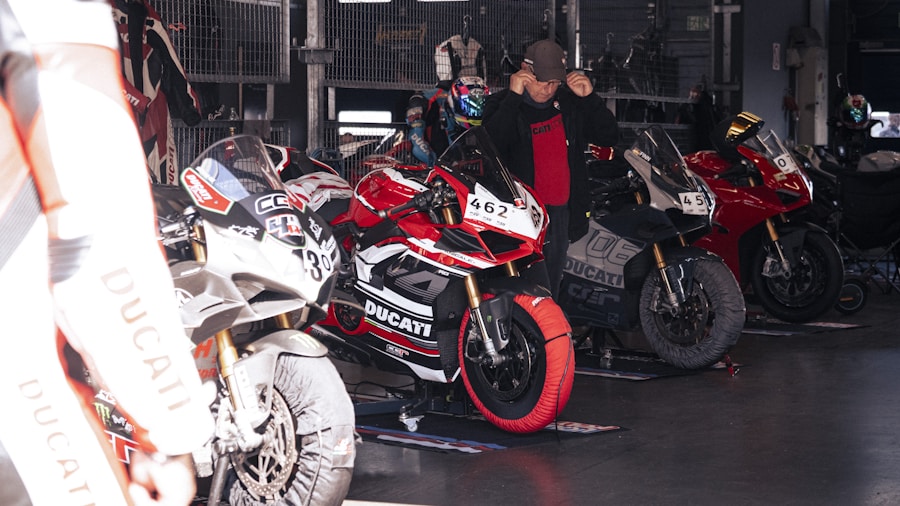
The Desmosedici’s legacy extends far beyond its current performance. Ducati pioneered technology that became standard throughout the grid, including the holeshot device that is now commonplace in professional racing. In 2027, that innovation will disappear entirely as new regulations eliminate the system. Few manufacturers have shaped modern motorsport as thoroughly as Ducati.
This dominance creates an interesting strategic position. By effectively winding down GP26 development, Ducati acknowledges that certain track weaknesses may not receive immediate technical solutions for the remainder of 2026. Instead, performance could depend heavily on circuit characteristics. Some tracks will suit the current Desmosedici’s strengths, while others might leave Ducati riders wishing for fresh parts.
Hope for Better Racing Ahead
The good news is that observers and riders involved in testing the 850cc machines are optimistic about the future direction. Honda test rider Aleix Espargaró, who has already ridden 850cc prototypes, described the new bike as more enjoyable than the current generation. He highlighted lower weight, stronger grip from the Pirelli tire compound, and reduced low-end torque as factors that could fundamentally change how riders approach corners and execute passing maneuvers.
Most importantly, Espargaró suggested the technical changes could produce more competitive battles on track. After years of seeing 1,000cc bikes reach almost absurd capability levels, the new formula promises to create conditions where more riders can genuinely compete for victories. That kind of closely contested racing is what ultimately engages fans and makes professional motorsport compelling to watch.
The Final Chapters for the GP26
Pirro’s comments about the GP26’s limited development schedule shouldn’t be interpreted as Ducati giving up on the current bike. The manufacturer absolutely intends to pursue race wins through 2026. The acknowledgment is simply recognition that this particular technological experiment has reached its natural endpoint.
The 1,000cc formula that began in 2012 produced motorcycles of frankly remarkable capability. Ducati pushed that concept about as far as engineering could reasonably take it. The current Desmosedici doesn’t need to become fundamentally different anymore. It just needs to complete its racing story while Ducati engineers work behind the scenes on the next generation of MotoGP machinery that will write the next chapter of motorcycle racing.
For enthusiasts and casual fans alike, the implication is clear: enjoy the GP26 while it races, because 2026 marks the final season for an era that transformed what motorcycles can do on a professional circuit.










Write Your Review
No reviews yet. Be the first to share your experience!