

Honda’s Bold Departure From Truck Tradition
When Honda introduced the first-generation Ridgeline in 2006, the automotive industry took notice, but not always in approval. Unlike every other pickup truck on the road, Honda chose to build the Ridgeline using unibody construction instead of the traditional body-on-frame design that had dominated the truck market for decades. This radical choice set the Ridgeline apart and created conversations that continue today about what defines a pickup truck.
Don Herner, the exterior design lead for the original Ridgeline, recently shared the untold story behind this controversial decision. Herner, who studied at California’s ArtCenter College of Design and previously interned at General Motors designing Corvettes, revealed that the Ridgeline project began almost by accident. When work slowed at Honda’s design studios, Herner and colleagues started sketching what they called an “Advanced Capabilities Vehicle” instead of a traditional truck. A marketing executive eventually championed these sketches as a potential production vehicle, transforming casual creative work into reality.
Why Honda Rejected Truck Conventions
Honda’s decision to build the Ridgeline as a unibody vehicle stemmed from practical engineering limitations. “Honda doesn’t make a transmission robust enough to turn gigantic wheels and tires,” Herner explained. Early design sketches featured oversized 32 and 35-inch wheels common in truck culture, but engineering rejected this approach entirely. Instead, Honda chose the smallest wheel and tire sizes possible to maximize torque delivery from the 3.5-liter V6 engine, which produced 255 horsepower and 252 pound-feet of torque. This configuration allowed the first-generation Ridgeline to tow 5,000 pounds and carry a 1,550-pound payload.
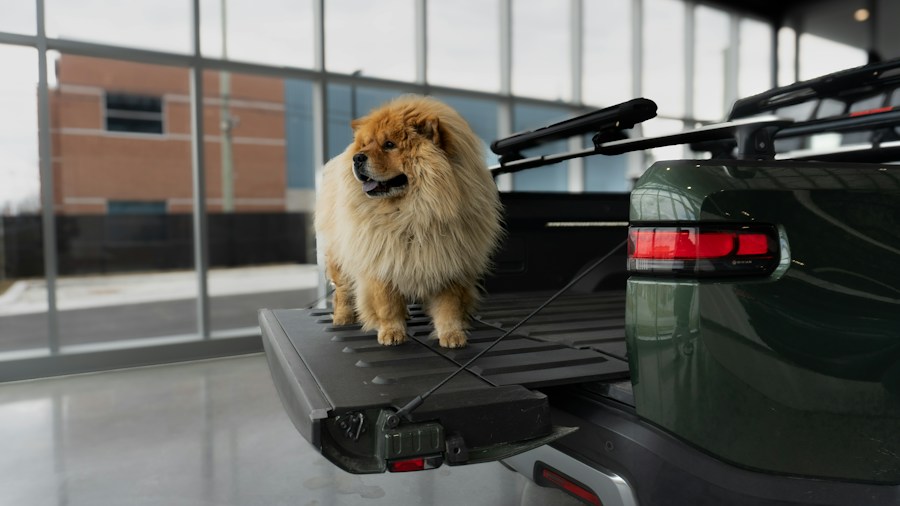
The cargo bed itself demonstrated Honda’s commitment to durability and longevity. Engineers selected fiberglass rather than steel to ensure the bed would withstand years of use without rust or corrosion. Extensive simulations tested the rear suspension to the breaking point, overloading the bed until suspension failure to understand exactly how much stress it could endure. The dual-action tailgate mechanism, a feature that survives on modern Ridgelines, extended nearly the entire length of the bed for structural integrity and to safely support the weight of multiple people standing on it.
Innovative Features That Changed Vehicle Design
Beyond its structural uniqueness, the first-generation Ridgeline introduced several clever features that seemed futuristic at the time. Buyers discovered a CD loader hidden behind the audio head unit, handbag storage between the dashboard and center console, and fold-up rear seats. While CD players have disappeared, many of these storage innovations have become standard features on vehicles across the industry today.
The Ridgeline’s unibody construction allowed Honda to create the largest production vehicle the company had ever made at that time. Building something this large required significant modifications to Honda’s assembly line processes and manufacturing capabilities. One detail that required personal approval from Honda’s president involved the company’s nameplate on the tailgate. Having “Honda” spelled out in the company’s official typeface violated traditional Japanese corporate aesthetics, a bold move that needed executive sign-off.
Long-Term Impact on the Pickup Market
Although the first-generation Ridgeline never became a mainstream pickup truck bestseller, it successfully created a niche market for car-based pickups. The vehicle proved that unibody construction could work in the truck segment, challenging assumptions about how pickups must be built. Honda’s continued commitment to the Ridgeline line through multiple generations demonstrates the enduring appeal of this alternative design philosophy.
Current Ridgeline models maintain the unibody construction while adopting more conventional exterior styling. The next generation will look even more like a traditional pickup truck, though Honda appears committed to preserving the unique features that made the original special. For shoppers considering their pickup truck options, understanding the Ridgeline’s heritage explains why this vehicle offers a fundamentally different ownership experience compared to body-on-frame competitors. Whether you prioritize car-like handling, exceptional reliability, or innovative storage solutions over traditional towing capacity, the Ridgeline’s unusual design choices continue to matter more than two decades after its introduction.








Write Your Review
No reviews yet. Be the first to share your experience!