

During the Formula 1 United States Grand Prix in Austin this past weekend, Tesla’s autonomous Cybercabs staged their most impressive public demonstration to date. The rideshare fleet expanded service hours, operated at record capacity, and outmaneuvered competitors to handle thousands of attendees traveling to and from Circuit of the Americas. For consumers watching Tesla’s self-driving technology mature, this event signals important milestones about when autonomous vehicles might become a realistic transportation option.
Record-Breaking Fleet Performance in Austin
Tesla deployed a significantly expanded Cybercab service area around the race track in the days leading up to the event. On October 22, the company quietly extended the rideshare service zone to wrap around the circuit toward Elroy and FM 812, pushing the last ride-request deadline to 1 a.m. This represented a major expansion from the previous midnight cutoff that had been in place just days earlier.
The fleet’s performance numbers tell a remarkable story. On Saturday during qualifying rounds, Cybercab Spotter tracked 1,250 individual Cybercab sightings throughout Austin, obliterating the previous record of 1,072 from October 16. While sightings count repeated vehicle movements rather than unique cars, the metric demonstrates how intensively Tesla was operating its fleet. By midday Sunday, the Texas automated vehicle registry showed 463 active Cybercabs available for service, up from the 300-plus vehicles Tesla claimed in early October.
When the race ended on Sunday afternoon, demand for rides home proved so substantial that Tesla’s leadership highlighted the surge. The company’s head of AI software shared photos showing gold-colored Cybercabs lined up for miles, with the caption ‘Robotaxis as far as the eye can see.’ Passengers simultaneously requested vehicles through the app, creating a real-world stress test for the autonomous fleet’s coordination and responsiveness.
Competitive Advantage and Market Implications
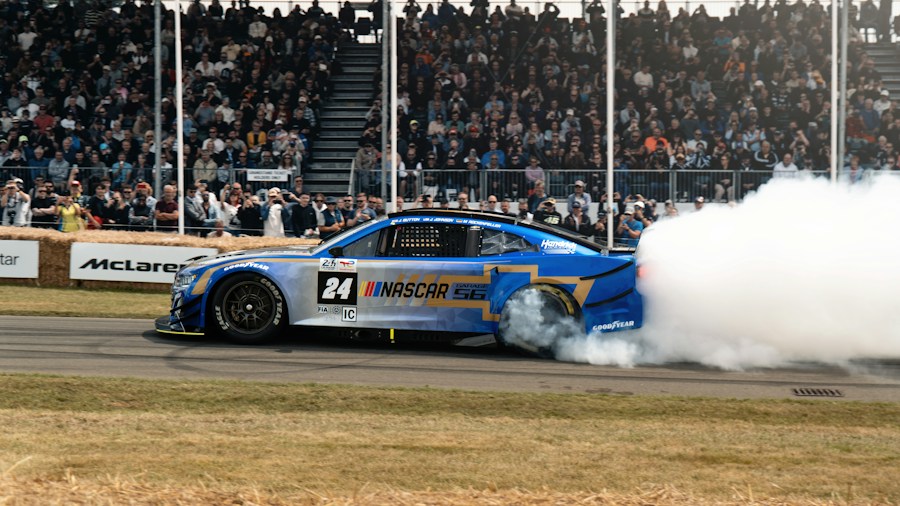
Tesla’s ability to claim the Austin F1 event stood in sharp contrast to its main competitor. Waymo, which operates in Austin exclusively through Uber, does not serve the track area and made no announcement of race day service expansion. This gave Tesla exclusive access to a concentrated group of affluent, tech-savvy consumers during a high-profile weekend.
The expanded service window also hints at Tesla’s trajectory. During the company’s third quarter earnings call, executives stated that 2 a.m. service is coming ‘pretty soon’ and that Robotaxi will operate around the clock before year’s end. Tesla Robotaxi growth now outpaces competitors as the company refines dispatch algorithms and passenger safety features. These improvements are not simply theoretical upgrades, but real-world engineering responses to handling thousands of simultaneous requests.
Consumer-Facing Features Advancing Rapidly
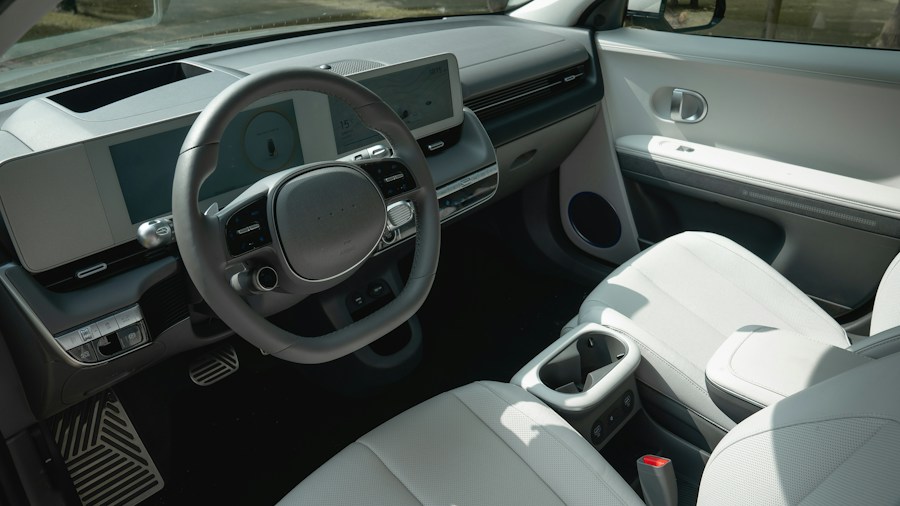
Alongside the Austin deployment, Tesla rolled out critical usability improvements for Cybercab passengers. The company added a rear-camera view accessible during rides, allowing occupants to see what is behind the vehicle on the center display. This responds directly to a gap in the Cybercab’s design: without a steering wheel, mirrors, or rear window, passengers previously had no natural way to monitor their surroundings.
The feature arrived roughly two weeks after a passenger made a public request for the capability. Tesla engineers responded that the enhancement was ‘in development,’ demonstrating how quickly the company iterates based on real-world feedback. The company also introduced ‘quiet mode,’ which darkens the cabin screen for passengers who prefer to relax or sleep during their ride.
These additions use the vehicle’s existing eight exterior cameras connected to Tesla’s autonomy software, meaning the rollout required only software changes. Tesla’s AI team leveraged machine learning tools to optimize how the camera feed displays to human passengers, showcasing the deeper integration of AI throughout the passenger experience.
What This Means for Future Buyers
Tesla has confirmed plans to deliver the first Cybercabs to customers before the end of 2026, marking the first time these autonomous vehicles will exist outside Tesla’s own fleet. The company’s willingness to deploy thousands of units at a single event demonstrates confidence in reliability and safety standards. However, Tesla has not disclosed how many total rides occurred during the F1 weekend or whether the expanded service hours will remain permanently in place.
The rapid feature improvements and demonstrated operational scale suggest Tesla is preparing the Cybercab for consumer ownership more seriously than many anticipated. Safety and convenience features continue rolling out at an accelerated pace, indicating the vehicle approaches production readiness. Prospective buyers watching from the sidelines now have tangible proof that autonomous ride-hailing technology functions reliably at scale, not merely in controlled demonstration environments.
The Austin F1 weekend proved to be far more than a marketing stunt. It served as a genuine operational challenge that tested Tesla’s autonomous systems under real-world conditions with thousands of passengers. As self-driving technology reaches consumers, events like this provide concrete evidence about which companies can deliver on their promises.


Write Your Review
No reviews yet. Be the first to share your experience!