

IIHS Crash Test Results: What Buyers Should Know About Seat Belt Safety in New Crossovers
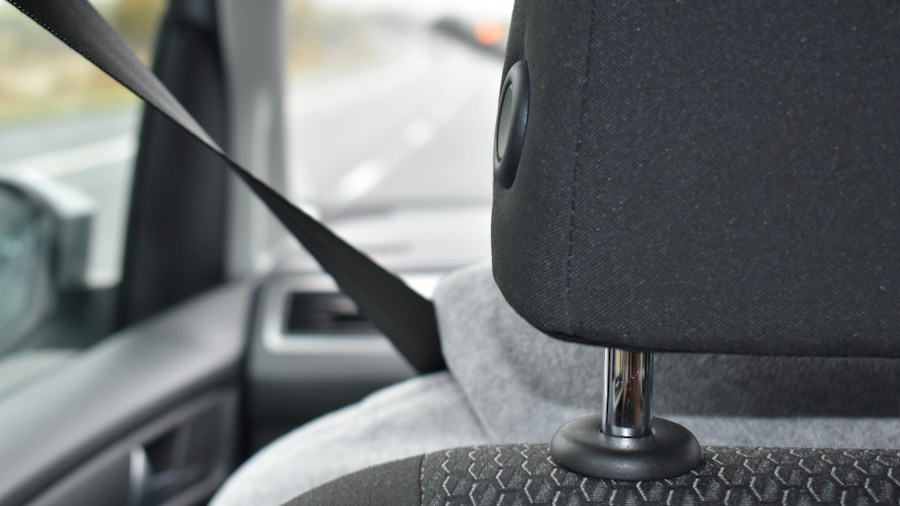
The Insurance Institute for Highway Safety recently completed crash testing on four popular small crossovers, and the results reveal a critical gap in rear passenger protection. Only one vehicle in this group earned the IIHS Top Safety Pick award, highlighting how rear seat belt design has become a major factor in how manufacturers approach crash safety.
The Updated Crash Test That Changed Everything
In 2022, the IIHS redesigned its moderate overlap front crash test to better evaluate real-world accident scenarios. The key change was adding a crash test dummy in the rear seat behind the driver, rather than testing only front-seat occupants. This shift reflects actual accident patterns where passengers sit in back seats during family trips and carpools. By 2024, the institute tightened scoring rules further to focus on how well rear seat belts stay in place and the amount of force they apply to passengers during impact.
This focus on rear seat belt performance has become the deciding factor for which vehicles meet Top Safety Pick standards. When you understand how critical proper seat positioning and belt fit really are, you realize why manufacturers are scrambling to redesign their restraint systems.
The Nissan Kicks Breakthrough
The redesigned 2025 Nissan Kicks initially failed the updated moderate overlap test with a Poor rating. However, Nissan acted quickly, revising the rear seat belt design and adding new load limiters on vehicles built after June 2026. Those later production models earned a Good rating and secured the Top Safety Pick designation for 2026 and 2027 model years manufactured from that date forward.
This is an important lesson for shoppers: the exact same model year and badge can have different crash test outcomes depending on when it was built. Checking your vehicle identification number (VIN) or build date is the only way to confirm whether your Kicks has the updated safety hardware. The narrow production window means two identical-looking crossovers rolling off the assembly line weeks apart could have fundamentally different rear seat protection.
Three Major Competitors Fall Short
The Audi Q3, Toyota RAV4, and Chevrolet Trailblazer all underwent the same updated moderate overlap test and failed to earn the award. The Audi Q3, redesigned for 2026, received a Poor rating despite Audi modifying the rear seat belts after May 2026. Testing revealed that the rear lap belt still slipped off the pelvis during the crash simulation.
The Chevrolet Trailblazer earned a Marginal overall rating in the updated moderate overlap test, mixing Good and Acceptable scores in other tests but not reaching the threshold needed for the award. The Toyota RAV4 came closer than the others. Its standard hybrid version earned an Acceptable rating, while the plug-in hybrid model scored Marginal in the same test. Interestingly, the heavier plug-in model performed worse in the crash scenario than its lighter gas-electric sibling, suggesting weight distribution and belt tension play important roles in passenger protection.
What Top Safety Pick Standards Really Mean
To earn the IIHS Top Safety Pick designation, a vehicle must achieve Good ratings in both the updated moderate overlap front test and the side crash test, earn at least Acceptable performance on headlights, and include an advanced or superior front crash prevention system. These requirements explain why the Nissan Kicks now stands alone in this small crossover group. The focus on rear seat belt design reflects decades of safety data showing that rear passengers face serious injury risk in frontal crashes when restraints fail to maintain proper contact with the body.
For shoppers evaluating vehicles in this category, the message is clear: rear seat belt performance matters. If you frequently transport family members or passengers in the back, the Nissan Kicks becomes a standout choice among these four options. However, even for vehicles that don’t earn the award, having awareness of how they performed in this test gives you better information for your purchase decision. Protection extends beyond human passengers too, making comprehensive safety design increasingly important for modern families.
Checking Your Vehicle Before You Buy
If you are considering any of these crossovers, check the build date carefully. For the Nissan Kicks, vehicles built after June 2026 have the improved safety systems. For the Audi Q3, modifications occurred after May 2026, though they still did not achieve the Good rating needed for the award. Ask your dealer for specific production dates and don’t hesitate to verify this information in the VIN before finalizing your purchase. Safety equipment is not something to overlook, and understanding the timing of design changes can directly impact the protection your family receives in an accident.






Write Your Review
No reviews yet. Be the first to share your experience!