

When Trent Daggett of Harrisburg, Pennsylvania set out to build a time attack racer capable of sustaining 10,000 RPM for extended periods, he faced a challenge that many engine builders would avoid altogether. His 1999 Acura Integra had to do something rare: perform competitively on a road course while remaining street-drivable. That dual purpose meant every component, especially the cylinder head, had to be engineered with precision and purpose.
Daggett’s approach offers valuable lessons for any enthusiast considering cylinder head work for high performance applications. Rather than selecting an engine with larger displacement, he chose to heavily modify his car’s original Honda B18C platform. This decision opened the door to extensive customization but also created demanding performance and reliability requirements that forced careful evaluation of nearly every aspect of the engine.
The Cylinder Head Became the Performance Foundation
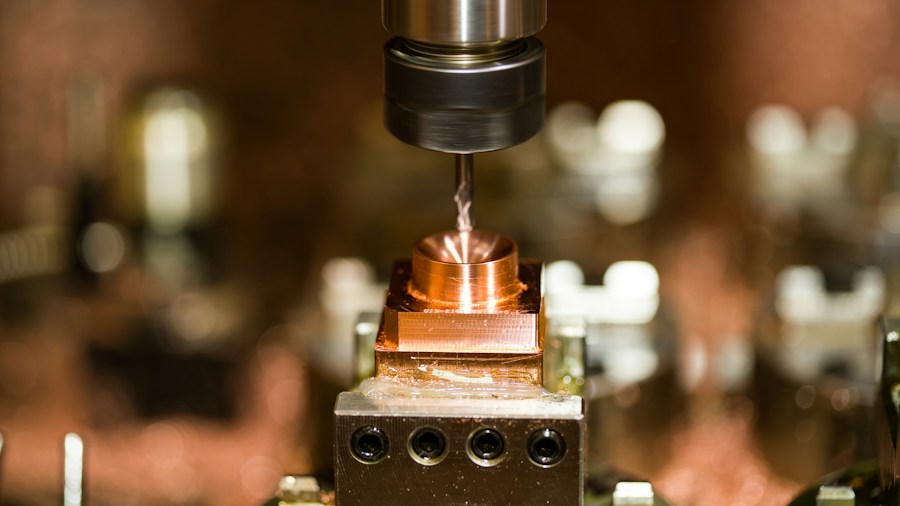
At the heart of this build lies extensive cylinder head development. The cylinder head received a complete 5-axis CNC porting job designed to maximize airflow while maintaining the port characteristics necessary for strong throttle response and a usable powerband across the entire rev range. This balance is crucial for road course racing, where drivers need responsive, predictable power delivery rather than peak power at a narrow RPM window.
The porting strategy revealed an important principle: bigger is not always better. Rather than simply opening the ports as much as possible, the team focused on finding the precise point where additional airflow would no longer justify the potential loss in throttle response. This refined approach means the cylinder head flows exceptionally well without sacrificing the mid-range performance needed for real-world competition.
Like other extreme performance builds, custom cylinder head packages require careful engineering for specific racing applications. Daggett’s team understood that simply buying off-the-shelf components and bolting them together would not deliver the results required.
Valvetrain Development Requires Specialized Components
An engine expected to operate at or near 10,000 RPM for extended periods needs more than just airflow. Maintaining valvetrain stability and controlling component wear became equally important design considerations. The cylinder head features a completely custom valvetrain from California-based Bad Guys Worldwide, including custom camshafts developed specifically for the engine’s intended operating range.
The camshaft profile was designed with two primary objectives: producing horsepower at elevated RPM while simultaneously minimizing stress and wear throughout the rocker assembly. For an engine that spends considerable time above 7,000 RPM, those considerations are critical. Aggressive camshaft profiles can improve cylinder filling and high-RPM horsepower, but excessive valve acceleration and valvetrain loading can compromise long-term durability.
During a recent outing at New Jersey Motorsports Park, Daggett’s engine accumulated approximately 37 minutes of running time above 7,000 RPM. Sustaining those speeds places considerable demands on every component in the valvetrain, making the selection of quality parts and overall system compatibility essential for reliability.
Intake and Exhaust Optimization Completes the Picture
Getting the B18C to breathe efficiently at elevated RPM required considerable development on both the intake and exhaust sides of the engine. The team performed extensive back-to-back dyno testing with different intake pipes, intake manifold configurations and plenum arrangements to determine which combination delivered the best balance of peak horsepower and throttle response.
The final configuration utilizes a ProForm air filter system with a velocity stack profile, a tapered intake pipe that transitions from 4 inches down to 3 inches, and a 78mm throttle body connected to a Skunk2 Ultra Street intake manifold that was CNC-ported for optimal flow. The intake manifold featured different porting configurations, plenum sizes and plenum spacers that were all evaluated during development. Modern cylinder head packages often include matched intake and exhaust systems designed to work together as a complete system.
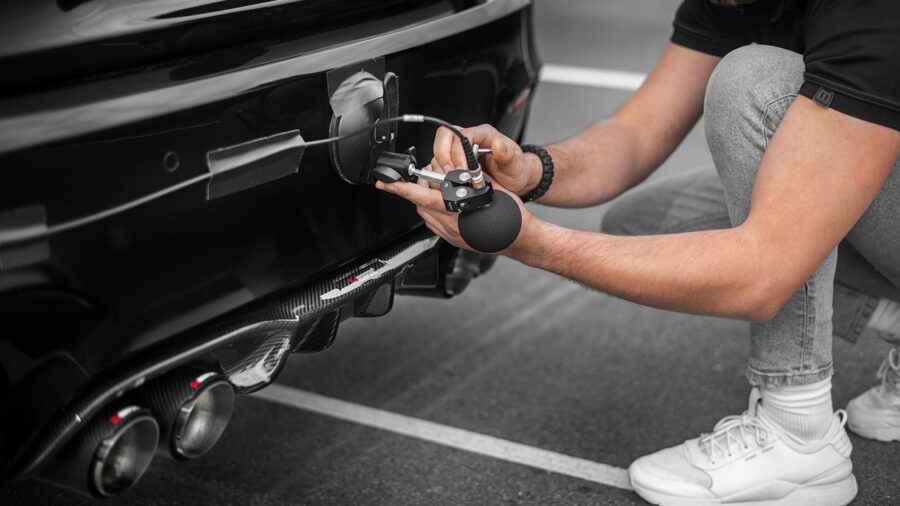
On the exhaust side, Daggett worked with Danny Tran Racing in California to develop a completely custom header. Rather than selecting an off-the-shelf design, the team engineered the header to produce strong torque and throttle response while also addressing one of the car’s less conventional requirements: ground clearance for street driving. The finished header sits higher than the engine’s oil pan, providing the clearance needed while maintaining the performance characteristics necessary for competition.
The Results Speak for Themselves
After extensive component development and dyno testing, Daggett’s naturally aspirated B18C produces 257 wheel horsepower and 187 lb.-ft. of torque, with an operating range extending to 10,000 RPM. While those figures are impressive for a naturally aspirated Honda B-series engine, the combination’s real accomplishment is its ability to deliver that performance over extended periods rather than in short bursts.
The engine was developed to produce a broad, usable powerband, strong throttle response and the durability necessary for repeated time attack sessions. Despite its custom pistons, high compression ratio, extensively ported cylinder head and high-RPM valvetrain, the Integra remains a car that can be driven on public streets.
This build demonstrates how much performance can be extracted from proven engine architecture when careful component selection, advanced machining, extensive testing and thoughtful engineering come together. For anyone considering cylinder head work for their own engine, the lesson is clear: invest in proper development, match all components to work together as a complete system, and prioritize reliability alongside raw performance.











Write Your Review
No reviews yet. Be the first to share your experience!