

The truck market has exploded with powerful factory-built off-road machines over the past decade. Models like the Ford F-150 Raptor and Ram 1500 TRX promise thrilling performance on rough terrain with impressive speed and capability. However, these vehicles come with a critical challenge that many owners don’t fully appreciate: their tall profile and high center of gravity make them fundamentally different to drive at speed compared to lower, more stable vehicles.
The Physics Problem with Tall Trucks
When a truck sits higher off the ground with more weight distributed upward, the laws of physics work against dynamic performance. That generous suspension travel, while excellent for absorbing bumps and rocks, creates a scenario where lateral weight transfer becomes a serious concern during aggressive cornering. If too much mass shifts to one side too quickly, a rollover becomes a real possibility, not just a theoretical one.
This isn’t a flaw in the trucks themselves; it’s simply how weight and geometry interact. Professional driving schools and instructors have dedicated significant effort to teaching owners how to work within these physical constraints. Even major manufacturers now send their engineers to off-road schools to develop better driving techniques and vehicle systems that compensate for these challenges.
Braking Technique is Everything

The most practical way to avoid instability in a tall truck is deceptively simple: brake in a straight line. This means scrubbing off all the speed you need before you even touch the steering wheel. Once you’ve slowed to a safe pace, gradually ease off the brake pedal while beginning to turn. This technique, known as trail braking, keeps weight distributed more evenly across all four tires and prevents the sudden shifts that lead to loss of control.
The temptation to use oversteer, sliding the truck through a corner with smooth aggression, should generally be resisted. That flashy approach might look impressive, but it sacrifices the stability and control that a tall, heavy truck actually needs. In situations where a corner doesn’t lead directly into a straightaway, oversteer can be useful for rotating the vehicle so you can straighten the wheel before accelerating. But even then, only apply throttle after the steering is completely unwound.
Transmission and Tire Choices Matter
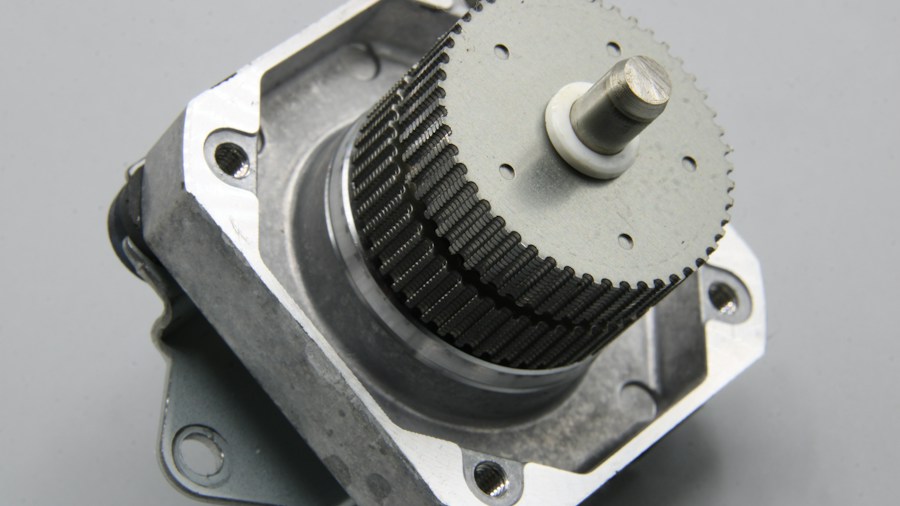
Most modern trucks include a selectable four-wheel drive system with high and low ranges. Keeping the transmission in 4-Hi mode provides superior braking stability and cornering control compared to two-wheel drive operation. While rear-wheel drifting might seem entertaining, it allows lateral loads to build faster, meaning you’ll have to constantly correct your steering inputs if you push too hard.
The tire choice also plays a role in this equation. All-terrain tires have squarer sidewalls that can bite aggressively into loose surfaces. While this is generally desirable for traction, it can create a lever action during extreme cornering or drifting that actually increases rollover risk. Excessive sliding and drifting isn’t just risky; it actively works against the mechanical advantages you need from your truck’s design.
What This Means for Buyers
If you’re shopping for a high-performance off-road truck, understand that capability and speed at your command require skill. These vehicles can absolutely perform at impressive levels on rough terrain, but doing so safely demands awareness of their limitations. Custom builds and modifications can expose engineering realities that highlight why professional instruction matters.
Consider whether you’re willing to invest time in learning proper technique or taking a defensive driving course. The good news is that the fundamental principles are learnable and applicable across different tall vehicles. Once you understand weight transfer, braking discipline, and controlled acceleration, you can apply these lessons whether you’re driving a Toyota Tacoma, a Ford F-150 Raptor, or any other truck with an elevated center of gravity.
The mechanics of keeping a tall, fast truck on line during aggressive off-road driving come down to smooth inputs, deliberate braking, and respecting physics. Modern factory trucks have tremendous capability, but that capability means nothing if you can’t control it safely. Master these techniques, and you’ll unlock what these machines can truly deliver.









Write Your Review
No reviews yet. Be the first to share your experience!