

Building a high-performance off-road machine from scratch is far more complicated than social media content might suggest. One automotive YouTuber recently discovered that cramming 300 horsepower, advanced suspension geometry, and cutting-edge turbocharging into a compact chassis can create engineering nightmares that even experienced fabricators fail to anticipate. His rapid 17-day build timeline exposed critical design flaws that offer important lessons for anyone shopping for or considering custom off-road vehicles.
The Ambitious Build Plan
The project, called “Crosscart V2,” aimed to merge the capabilities of a trophy truck with the precision handling of a Formula 1 race car into a street-legal dune buggy. To achieve 300 horsepower in a lightweight package, the builder chose a turbocharged Suzuki Hayabusa motorcycle engine, a bold decision that would require meticulous planning and fabrication.
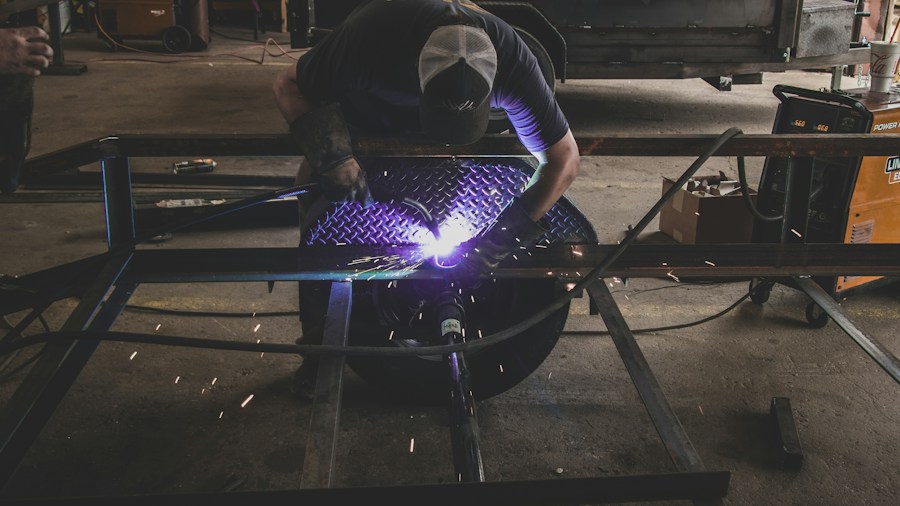
The frame construction began with 60 feet of Drawn Over Mandrel steel tubing, costing roughly $1,500. Working through grueling 14-hour days, the fabricator spent weeks cutting, coping, and welding individual tubes to create a cohesive chassis. He incorporated several smart shortcuts common in the custom kit-car community, such as using mass-produced Mazda Miata spindles and brake components for the front suspension instead of spending extra time on custom wheel hubs.
The suspension design showcased impressive technical depth. The front end was raked up by five degrees to provide anti-dive characteristics during heavy braking, a technique borrowed from high-end race car engineering. The builder also invested considerable effort in tuning the front steering rack to completely eliminate bump steer, a condition where steering inputs change unintentionally during suspension movement. The finished rolling chassis delivered an impressive 10 inches of suspension travel, putting it in the same category as professional off-road machines.
When Speed Meets Reality
After roughly two and a half weeks, the rolling chassis was complete, and the builder expressed confidence that the entire buggy could be finished in under a month. However, this aggressive timeline created a critical oversight that would derail the project’s momentum.
When attempting to install the turbocharged Hayabusa engine, the fabricator discovered that he had grossly underestimated the physical space required for the powerplant. The engine itself was outfitted with an expensive dry sump oil system, a sophisticated cooling solution required to prevent oil starvation during extreme off-road maneuvers and sustained high-G drifting. This system demands precise mounting and careful routing of oil lines throughout the chassis.
The turbocharger installation exposed the most serious packaging problem. When the builder attempted to position the turbo unit within the frame, it made direct contact with the steel tubing of the firewall. To avoid this interference, he needed to mount the turbo lower in the chassis. This created an impossible situation: if the turbo sat too low, gravity could not pull oil down from the turbocharger’s center cartridge back into the oil pan.
This seemingly small detail actually represents a catastrophic failure mode. Without proper oil drainage, the turbo’s internal seals fail rapidly, causing the entire turbocharger to self-destruct and potentially causing secondary engine damage. As the frustrated builder acknowledged, the problem highlighted how custom off-road vehicle development works in the real world: solving one constraint invariably creates new ones.
What This Means for Off-Road Shoppers
This real-world fabrication challenge reveals why off-road vehicles command premium prices and why established manufacturers invest heavily in engineering teams. Leading automakers such as Honda train engineers specifically in off-road conditions to ensure their vehicles handle extreme terrain without compromising reliability.
For buyers evaluating custom-built off-road machines or boutique manufacturers entering the market, this story underscores the importance of demanding detailed engineering documentation and proven track records. Small design oversights that seem manageable in theory create expensive, time-consuming problems during actual fabrication and testing.
Additionally, buyers shopping for turbocharged off-road vehicles should understand that engine packaging requires specialized knowledge. Modern off-road platforms like the Diamond Trail Edition incorporate years of packaging expertise to balance performance with reliability.
The builder now faces three difficult choices: cut apart the nearly completed chassis and relocate the firewall, aggressively reposition the turbocharger away from its optimal location, or completely redesign the engine management around a different turbo configuration. Each option costs time, money, and risks structural integrity.
The Broader Lesson
This project demonstrates why properly engineered off-road vehicles are worth their investment. Professional manufacturers account for every cubic inch of space, test countless configurations, and build in margins for error. Rushing the design phase to meet arbitrary timelines inevitably leads to expensive problem-solving during assembly.
For buyers shopping in today’s off-road market, this is a reminder to prioritize vehicles from manufacturers with proven engineering processes over flashy homemade concepts that prioritize speed over system integration.









Write Your Review
No reviews yet. Be the first to share your experience!