

BMW has filed a patent for a suspension-based drift-assist system that could fundamentally change how casual drivers approach high-performance driving. The innovation uses active suspension technology to briefly lift or bounce the rear wheels, reducing traction and making it easier for drivers to initiate a controlled drift without years of practice. This marks one of the most ambitious attempts by a mainstream automaker to democratize a driving technique that traditionally requires significant skill and experience.
How the Technology Works
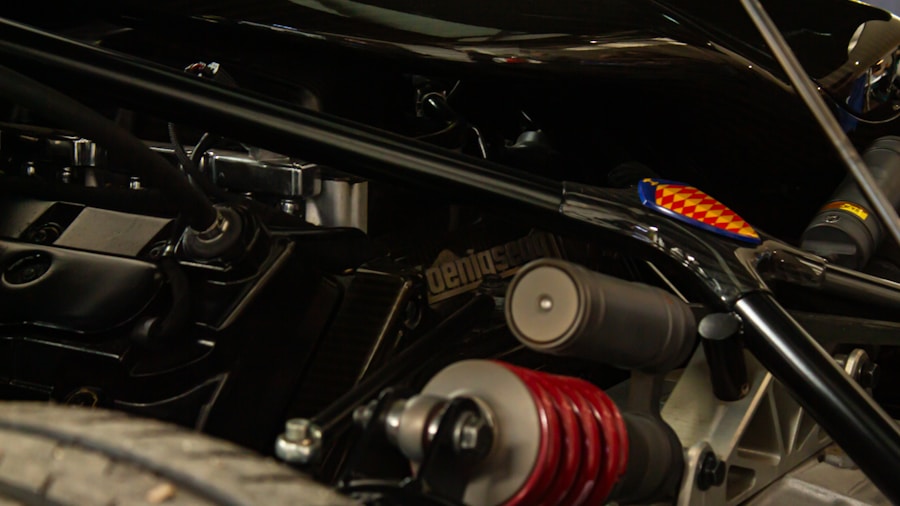
The system relies on BMW’s adaptive suspension or active roll-control hardware to perform what engineers call an “impulse-like displacement” of the unsprung mass. In practical terms, this means the rear axle briefly bounces upward during specific driving conditions, momentarily lightening the load on the rear tires. When weight transfers away from the rear wheels, they lose grip more easily, allowing the driver to initiate a drift with minimal throttle input.
The technology is activated through multiple methods. The car can detect driver intent via sensors and calculations, or it can simply ask the driver if they want to start a drift. Once engaged, the system monitors steering angle, vehicle speed, and road position to ensure the maneuver stays controlled. The activation would only occur during hard cornering or when the steering angle reaches a predetermined threshold, preventing accidental engagement during normal city driving.
BMW suggests the system could even store preferred steering angle settings, allowing drivers to customize when drifting is possible. The same suspension technology could theoretically work on the front axle for reverse drifts, though BMW acknowledges this scenario sounds less practical.
What This Means for the Driving Experience
The patent filing comes alongside BMW’s existing driver assistance features and control systems, which have become increasingly sophisticated in recent model years. By pairing this drift-assist system with BMW’s Drift Analyzer tool, the company is essentially creating a comprehensive package that turns sideways driving into an achievable skill for anyone behind the wheel.
Currently, initiating a drift requires precise driver input. Techniques like handbrake applications, clutch kicks, or steering flicks demand practice and finesse. Mistakes during the initiation phase often result in loss of control or the drift fizzling out. BMW’s system removes the most challenging part of the equation, allowing drivers to focus on maintaining and exiting the drift rather than starting it. This lowers the barrier to entry significantly.
Safety and Regulatory Considerations
While the technology is impressive from an engineering standpoint, it raises important questions about real-world application. The patent explicitly mentions the system would work within defined vehicle speed ranges and would require specific steering inputs, suggesting BMW is thinking about safety. However, activating drift-assist features on public roads remains a serious concern.
Law enforcement and the National Highway Traffic Safety Administration would almost certainly object to widespread deployment of drift-assist technology on street-legal vehicles. Even with safeguards, enabling drivers to perform high-risk maneuvers on public roads creates liability and safety issues. The technology would be far more practical and legally defensible on closed courses, racetracks, or dedicated driving experience venues.
Another consideration involves insurance implications. Vehicles equipped with drift-assist could be classified differently by insurers, potentially affecting premium calculations or coverage terms. Buyers interested in this type of technology should check with their insurance provider about any special requirements or restrictions.
Will This Technology Actually Reach Production?
It’s important to note that patent filings do not guarantee future production. Companies file patents primarily to protect intellectual property and prevent competitors from developing similar technologies. BMW could file this patent and never actually implement the feature in consumer vehicles. Patent protection is valuable even if the technology never reaches the market.
That said, BMW’s history of introducing advanced driver-assistance and performance technologies suggests the company is serious about innovation in this space. If BMW does move forward with development, other advanced features the company is exploring might eventually become standard on their performance lineup.
What Shoppers Should Consider
For buyers interested in BMW performance models, this patent filing signals the company’s commitment to making driving experiences more accessible and enjoyable. Even if drift-assist doesn’t reach production, the underlying technology demonstrates where the industry is heading: toward vehicles that actively assist drivers in achieving challenging maneuvers safely.
Prospective buyers should monitor BMW’s official announcements regarding this technology. If it does enter production, expect it to appear first on high-performance variants like the M series. Keep an eye on official specs and feature lists for future M2, M4, and other performance models to see whether drift-assist becomes a reality.





Write Your Review
No reviews yet. Be the first to share your experience!